
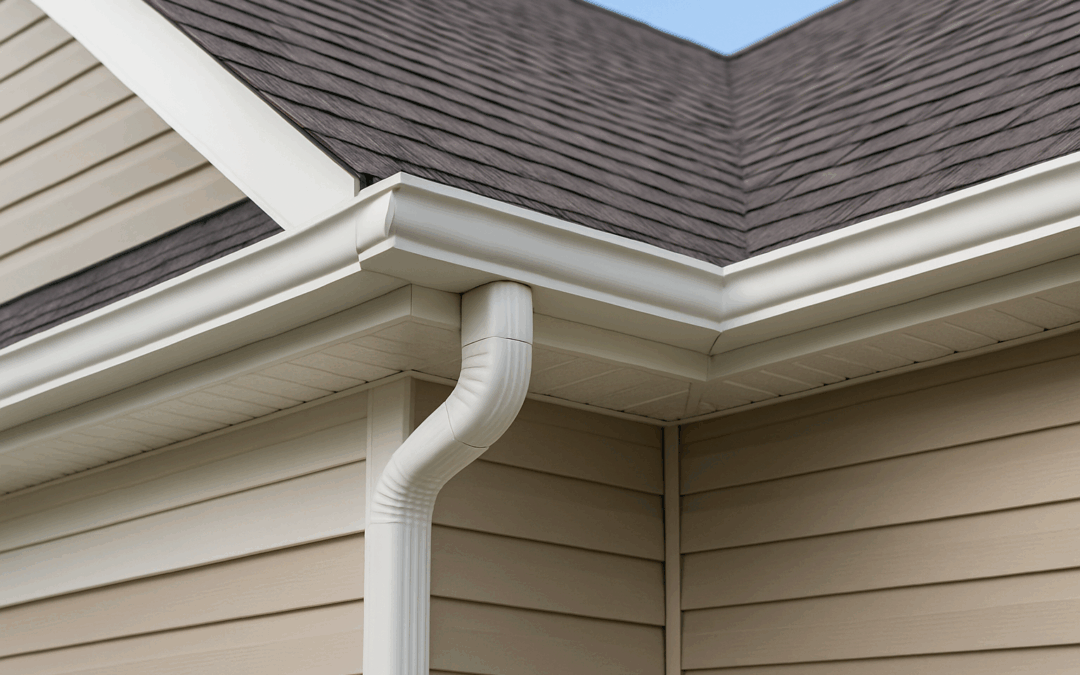
When homeowners think about gutter systems, the gutter channel itself — the horizontal trough running along the roofline — tends to receive most of the attention. Yet the downspout, the vertical pipe that carries collected roof surface runoff from the gutter channel down to ground level and away from the structure, is equally critical to the gutter system’s overall water management performance. A gutter system with undersized, improperly placed, poorly maintained, or damaged downspouts cannot perform its protective function regardless of how well the gutter channel itself is designed or maintained. Tiger Gutters recognizes that Memphis, Tennessee homeowners benefit from a thorough understanding of downspouts — what they do, how they are sized, where they should be placed, what materials they are made from, and what maintenance they require in Memphis’s specific climate environment.
What Downspouts Do
The downspout’s fundamental function is deceptively simple: it receives water collected by the gutter channel and conveys it vertically from the roofline to ground level, where it is discharged away from the structure’s foundation. This function, while straightforward in description, is the critical final step in the gutter system’s complete water management chain. Gutters that collect roof runoff effectively but lack adequate downspout capacity to drain that collected water are no more protective than gutters with no downspouts at all — the collected water simply overflows the gutter channel, reaching the fascia, soffit, foundation perimeter, and landscape from an elevated position that concentrates its impact.
Beyond simple vertical conveyance, downspouts perform several related functions. They maintain gutter slope effectiveness by providing the drainage endpoint toward which the gutter channel’s slight slope directs water flow. They concentrate dispersed roof surface runoff into controlled discharge points that can be directed specifically away from foundation perimeters, toward drainage features, or into underground drainage systems. They protect the fascia and roofline from the chronic moisture contact that would result if collected water were allowed to overflow the gutter channel or drain through unsealed gutter joints. And they provide the outlet through which debris flushed from the gutter channel during cleaning exits the system.
Downspout Sizing: Why It Matters in Memphis
Downspout sizing — the cross-sectional area of the downspout opening — determines how quickly water collected in the gutter channel can drain. Undersized downspouts relative to the roof area they serve create a drainage bottleneck: during heavy rainfall events, water enters the gutter channel faster than the downspout can drain it, causing the gutter to fill and eventually overflow regardless of debris conditions. In Memphis, where spring thunderstorms can deliver one to three inches of rainfall per hour and summer Gulf moisture events produce similarly intense short-duration rainfall, downspout sizing for peak flow capacity is a meaningful performance consideration.
Standard residential downspout sizing follows general guidelines relating downspout cross-sectional area to the roof surface area draining to each downspout outlet. Commonly used residential downspouts measure 2×3 inches or 3×4 inches in rectangular profile, or 3 or 4 inches in diameter for round downspouts. The appropriate size for a specific application depends on the roof area served, the local rainfall intensity design standard used for sizing, and the gutter profile size.
Memphis’s high annual rainfall — approximately 54 inches per year — and the intense storm events that characterize the city’s spring and summer seasons argue for attention to downspout sizing adequacy. Homes where gutters consistently overflow despite clean, unobstructed channels and correct slope may have downspouts that are undersized for the roof area they serve in Memphis’s high-intensity rainfall environment. Understanding this relationship helps homeowners evaluate whether overflow problems reflect maintenance issues or system design limitations.
Downspout Placement and Spacing
Downspout placement — where along the gutter run each downspout is positioned — affects the gutter system’s ability to drain effectively and determines where roof runoff is discharged at ground level. Several principles guide appropriate downspout placement and spacing.
Spacing Relative to Gutter Run Length: Industry guidelines generally recommend downspout placement at intervals no greater than 30 to 40 feet along gutter runs, with many installations placing downspouts at shorter intervals depending on roof area, gutter slope, and local rainfall intensity. Memphis’s high rainfall intensity argues for downspout spacing at the closer end of standard ranges to minimize the volume of water each downspout must handle during peak events.
Placement at Run Ends: Long gutter runs without internal downspouts typically slope toward one or both ends where downspouts are located. Very long runs sloped to a single end downspout require adequate slope across the full run length to prevent standing water at the upslope end — a consideration in Memphis where any standing water in gutters during the warm season creates conditions for biological growth and accelerated corrosion.
Discharge Location: Downspout placement determines where roof runoff is discharged at ground level. Discharge should be directed away from foundation perimeters, toward areas where ground slope carries water away from the structure, and away from basement window wells, HVAC equipment, crawl space vents, and landscape plantings sensitive to concentrated water. In Memphis, where clay soils in many neighborhoods expand significantly when saturated, directing downspout discharge well away from the foundation perimeter is particularly important for managing foundation moisture conditions.
Avoiding Problematic Discharge Locations: Downspouts should not discharge onto paved surfaces where concentrated runoff creates icing hazards during Memphis’s winter freeze events, onto neighboring properties where concentrated discharge could cause erosion or drainage conflicts, or into areas where the landscape grade directs water back toward the foundation.
Downspout Extensions and Underground Drainage
The downspout itself ends at or near ground level, but the management of discharged water does not end there. Downspout extensions — devices that attach to the downspout outlet and direct discharge water horizontally away from the foundation before it contacts the soil — are an important component of complete downspout function. Extensions should direct discharge a minimum of several feet from the foundation perimeter, with greater distances providing more positive protection in Memphis’s clay soil environment.
Several extension types are commonly used. Rigid aluminum or vinyl extensions provide fixed-direction horizontal discharge. Flexible corrugated extensions allow the discharge direction to be adjusted and can be positioned to avoid landscape features. Roll-out splash blocks — flat concrete or plastic units placed beneath the downspout outlet — redirect discharge away from the foundation and distribute the water’s impact energy to reduce soil erosion at the discharge point.
Underground downspout drainage systems connect downspout outlets to buried drainage pipes that carry roof runoff to a remote discharge point — a pop-up emitter in the yard, a connection to a storm drainage system, or a dry well or infiltration feature. Underground systems are particularly effective for Memphis homes where surface grade does not provide adequate slope for surface extensions to direct water sufficiently far from the foundation, or where landscape considerations make surface extensions impractical.
Downspout Materials and Durability in Memphis
Residential downspouts are manufactured from several materials, each with different durability and performance characteristics in Memphis’s climate.
Aluminum: The most common residential downspout material, aluminum downspouts offer good corrosion resistance, light weight, and easy installation. Aluminum forms a protective oxide layer that resists further oxidation in normal conditions, but Memphis’s acidic rainfall — slightly acidified by atmospheric pollutants and organic acids from the city’s substantial tree canopy — can accelerate oxidation of aluminum surfaces over time. Aluminum downspouts are available in painted finishes that enhance appearance and corrosion resistance when the paint film remains intact.
Galvanized Steel: Galvanized steel downspouts offer greater physical strength than aluminum — relevant where downspouts are subject to impact from yard equipment or vehicle contact — but are more susceptible to corrosion once the galvanized coating is scratched or worn. In Memphis’s humid environment, galvanized steel downspouts with compromised coating develop rust relatively quickly, making aluminum generally the preferred material for most Memphis residential applications.
Vinyl: Vinyl downspouts offer complete corrosion immunity and are a common choice in residential applications where physical impact resistance is less critical. Vinyl downspouts can become brittle in cold temperatures — a characteristic relevant during Memphis’s occasional winter freeze events — and UV exposure over years can cause color fading and surface degradation.
Copper: Copper downspouts offer exceptional longevity and develop a distinctive patina over time. Used primarily in high-end residential applications and historic properties, copper downspouts are more expensive than aluminum or vinyl but provide service lives measured in decades with minimal maintenance.
Common Downspout Problems and What Causes Them
Blockages: Downspout blockages — accumulations of debris that prevent or restrict water flow through the downspout — are among the most common gutter system problems. In Memphis, where sweetgum balls, pecan husks, and diverse organic debris from the city’s tree canopy enter gutters throughout the year, downspout openings at the gutter outlet are vulnerable to blockage by material that passes through the gutter channel but becomes lodged at the transition into the narrower downspout opening. Blocked downspouts cause gutter overflow even when the gutter channel itself is relatively clean.
Joint Separations: Downspout sections connect at overlapping joints that rely on friction fit and, in some installations, mechanical fasteners to remain sealed. In Memphis’s climate, thermal cycling between summer heat and winter cold causes expansion and contraction that can work joints loose over time, creating gaps through which water exits the downspout before reaching the ground-level discharge point. Joint separations at locations where the downspout runs against the fascia or wall surface direct water behind the downspout onto those surfaces, creating moisture damage at points that are difficult to observe casually.
Elbow and Offset Damage: Downspouts typically include elbows — angled connecting pieces — where the downspout transitions from vertical to angled sections that offset it from the wall or transition it around architectural features. These elbows are points of reduced flow capacity and are vulnerable to blockage by debris that passes through straight sections. Damaged or separated elbows also create water exit points that direct discharge onto wall surfaces.
Inadequate Discharge Management: Downspouts that discharge directly at the foundation perimeter without extensions, or that discharge onto flat areas where water pools rather than moving away from the structure, complete the collection function but fail the dispersal function that is equally important to foundation moisture protection.
Seasonal Maintenance Considerations for Memphis Downspouts
Memphis’s extended debris season — driven by the city’s diverse and abundant tree canopy producing organic material across multiple seasons — makes downspout inspection and clearing a recurring seasonal maintenance task. Downspout flushing during gutter cleaning confirms that collected water can exit the system at the designed flow rate. Inspection of joints and elbows after summer’s thermal cycling and after winter’s freeze events identifies separations and damage before active rainfall reveals them through water damage. Clearing of discharge areas to ensure extensions and splash blocks remain properly positioned and unobstructed by landscape growth or soil movement maintains the ground-level dispersal function that completes the downspout system’s protective role.
Conclusion
Downspouts are the essential final component in the gutter system’s complete water management chain, conveying collected roof runoff from the gutter channel to controlled ground-level discharge and protecting the fascia, foundation, and structure from the moisture damage that inadequate drainage would cause. Tiger Gutters understands that Memphis, Tennessee homeowners benefit from knowing how downspouts function, how sizing and placement affect performance in Memphis’s high-rainfall environment, what materials and extension options are available, what problems commonly develop, and what maintenance keeps downspouts performing effectively throughout Memphis’s demanding year-round climate. Understanding downspouts as a complete system — from the gutter outlet through the vertical run, elbows, and discharge extension to the ground — gives Memphis homeowners the knowledge to evaluate their gutter systems comprehensively and maintain the complete water management performance their homes require.