
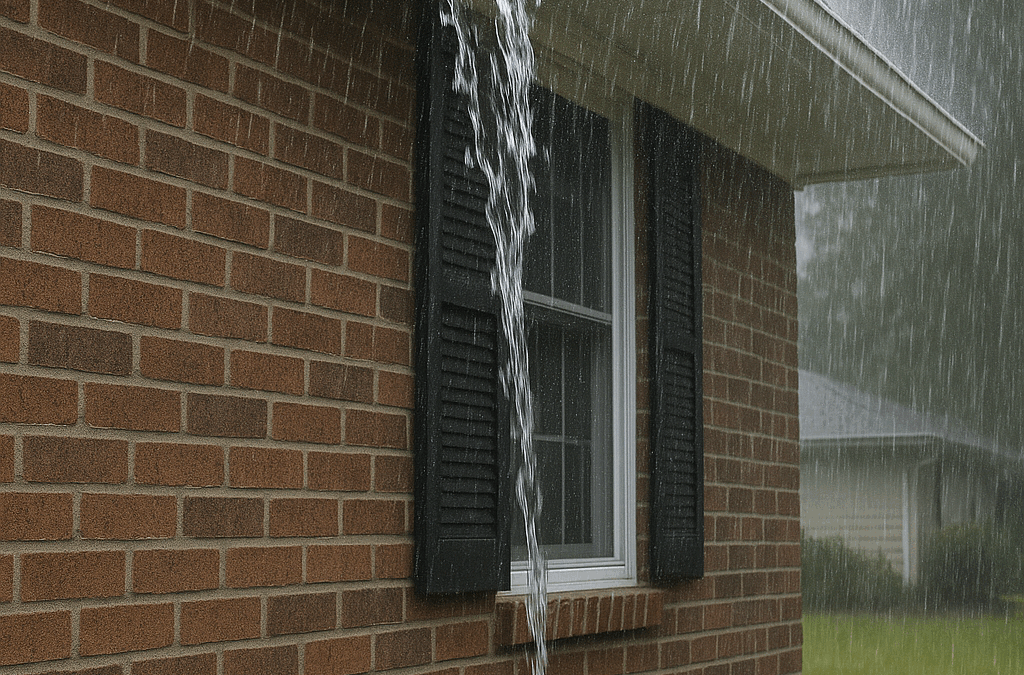
Memphis, Tennessee sits at a geographic and climatic crossroads that makes it one of the more demanding environments in the entire mid-South for residential gutter systems. Positioned where the Mississippi River lowlands meet the mid-continental weather corridor, Memphis experiences a humid subtropical climate that delivers heavy annual rainfall, intense summer thunderstorms, periodic winter ice events, high ambient humidity throughout much of the year, and a tree canopy that contributes substantial seasonal debris to gutters across multiple seasons. Tiger Gutters recognizes that Memphis-area homeowners benefit from a detailed understanding of how the city’s specific climate patterns affect gutter system performance, what seasonal demands arise throughout the year, and what the consequences of inadequate gutter maintenance look like in Memphis’s particular environment.
Memphis’s Rainfall Profile
Memphis receives approximately 54 inches of average annual rainfall — a figure that places it among the wettest major cities in the mid-South and significantly above the national average of roughly 38 inches. This rainfall is distributed throughout the year without a pronounced dry season, meaning Memphis gutters face water management demands in every month of the calendar year rather than in a defined wet season followed by extended dry periods.
The distribution of this rainfall across seasons matters as much as the total volume. Memphis’s spring season — roughly March through May — delivers the year’s most intense rainfall alongside the thunderstorm activity that the region’s warm, unstable air masses produce. High-volume storm events during spring can deliver one to three inches of rain within a single hour, creating roof surface runoff rates that test gutter capacity, downspout drainage speed, and the integrity of every joint and seam in the gutter system simultaneously. Gutters that are partially blocked by winter debris accumulation enter the spring storm season with reduced capacity, making the combination of peak debris loading and peak rainfall volume particularly consequential for Memphis homes.
Summer in Memphis brings continued rainfall alongside extreme heat and humidity. Gulf moisture surges periodically deliver heavy rainfall events to the Memphis area, and summer thunderstorms — while often shorter in duration than spring systems — can be highly intense. The heat and UV intensity of Memphis summers also affect gutter materials directly, accelerating the oxidation of aluminum gutters’ protective oxide layer, causing sealant materials at joints and end caps to harden and crack, and stressing the expansion and contraction behavior of gutter runs during daily temperature cycling between cool nights and extremely hot afternoons.
Autumn delivers a drier period relative to spring but brings Memphis’s most significant debris loading event. The city’s extensive tree canopy — featuring oaks, sweetgums, pecans, maples, tulip poplars, and diverse ornamental species planted throughout Midtown and East Memphis neighborhoods — deposits enormous volumes of leaves into gutters during the October and November leaf fall. Gutters that are not cleaned promptly after leaf fall enter winter with heavy debris loads that dramatically reduce drainage capacity and create the standing water conditions that accelerate corrosion, support biological growth, and contribute to ice formation during Memphis’s periodic winter freezes.
Winter Weather and Memphis Gutters
Memphis’s winters are mild compared to more northern cities but create specific gutter challenges through the combination of periodic ice events and freeze-thaw cycling. Memphis receives occasional ice storms — freezing rain and sleet events that deposit ice on roof surfaces, in gutters, and on downspouts. Unlike the gradual snowpack that northern cities experience, Memphis ice events can occur suddenly during brief cold intrusions following warm periods, and the weight of ice accumulation in debris-blocked gutters creates significant loading stress on gutter fasteners and the fascia boards supporting them.
Freeze-thaw cycling during Memphis winters — temperatures cycling above and below freezing over periods of days or weeks — creates expansion and contraction stress in gutter systems. Sealants at mitered corners and end caps that have hardened from summer heat become brittle in cold temperatures and crack during thermal cycling, creating leak points that may not become apparent until spring rainfall reveals water dripping behind the fascia rather than exiting through downspouts. Identifying and addressing these sealant failures after winter and before peak spring rainfall is an important seasonal maintenance consideration for Memphis homeowners.
The Tree Canopy Factor
Memphis’s urban and suburban tree canopy is one of the city’s defining environmental characteristics and one of the most significant factors affecting residential gutter maintenance demands. The diversity of Memphis’s tree species creates a debris calendar that extends well beyond the concentrated autumn leaf fall that most homeowners associate with gutter cleaning season.
Spring brings pollen, seed pods, and catkins from oaks, pecans, and sweetgums that wash into gutters during April and May rains. Sweetgum balls — the spiky seed pods of the sweetgum tree, which is extremely common throughout Memphis’s residential neighborhoods — are particularly problematic for gutters, accumulating in downspout openings and creating blockages that debris screening does not always prevent effectively. Summer brings additional organic material from storms breaking branches and depositing leaves. Autumn’s full leaf fall represents the peak debris event, but Memphis’s relatively mild winter means leaves from late-dropping species remain in gutters well into December and January before cold periods cause complete defoliation.
The practical consequence of this extended debris calendar is that once-annual gutter cleaning — common in climates with concentrated single-season debris loading — is frequently insufficient for Memphis homes with significant tree canopy coverage. The extended and diverse debris loading that Memphis’s tree species produce argues for multiple annual cleaning events to maintain adequate gutter drainage capacity throughout the year.
Humidity and Its Effects on Memphis Gutter Systems
Memphis’s high ambient humidity — summer relative humidity regularly exceeds 70 to 80 percent — creates deterioration conditions for gutter system components beyond what rainfall alone produces. Standing water retained in gutters by debris blockage or inadequate slope evaporates slowly in Memphis’s humid air, maintaining wet conditions in the gutter channel for extended periods following rain events. This sustained moisture supports algae, moss, and mold growth in gutters, accelerates oxidation of metal components, and softens the wood fascia boards supporting the gutter system if water contacts them through failed sealants or overflow.
The combination of standing organic debris and high humidity in blocked Memphis gutters creates conditions where decomposition of organic matter acidifies the water retained in the gutter channel. This organic acid water is more corrosive to aluminum and galvanized metal than clean rainwater, accelerating the breakdown of gutter protective coatings and contributing to premature deterioration of gutter materials in homes where cleaning is infrequent.
Consequences of Inadequate Gutter Maintenance in Memphis
Foundation Moisture Damage: Memphis’s clay-heavy soils expand significantly when wet and contract when dry — a soil behavior pattern called shrink-swell that creates movement stress on foundation structures. Gutters that overflow or direct water toward the foundation perimeter rather than away from it subject these soils to repeated saturation cycles that cause foundation movement, settling, and cracking over time. Controlling roof surface runoff through properly maintained gutters and downspout extensions is particularly important in Memphis’s clay soil environment.
Fascia and Soffit Deterioration: Gutter overflow in Memphis’s high-humidity climate creates chronic moisture exposure for fascia boards and wood soffit that deteriorates these components rapidly. The warm temperatures that accompany Memphis’s rainfall seasons support active biological deterioration of any wood that receives sustained moisture contact, meaning fascia rot in Memphis develops faster than in cooler climates receiving equivalent moisture.
Basement and Crawl Space Moisture: Many Memphis homes — particularly older homes in Midtown, Cooper-Young, and similar established neighborhoods — have basements or crawl space foundations that are susceptible to moisture intrusion when surface water is not directed effectively away from the structure. Gutter overflow contributing to foundation perimeter saturation can translate to basement or crawl space moisture problems that affect indoor air quality, structural wood components, and mechanical systems.
Roof Edge and Shingle Damage: Ice dam formation in gutters blocked by debris during Memphis’s winter ice events can force water beneath shingles at the roof edge, creating interior moisture damage and contributing to the shingle edge deterioration and rot that follows repeated water infiltration. While Memphis’s ice events are less frequent than in northern climates, their consequences for debris-blocked gutters are significant when they occur.
Seasonal Maintenance Considerations for Memphis Homes
Memphis’s climate argues for a gutter maintenance approach organized around the city’s specific seasonal weather patterns rather than a generic annual schedule. Pre-spring cleaning — removing winter debris accumulation before peak spring rainfall — ensures maximum drainage capacity entering the storm season when it is most needed. Post-leaf fall cleaning — after November defoliation is complete — removes the year’s heaviest debris accumulation before winter freeze events can create ice-laden, debris-blocked gutter conditions. Homes with heavy sweetgum or pecan coverage may benefit from additional cleanings aligned with those species’ specific debris production patterns.
Sealant and joint inspection after winter thermal cycling — identifying cracks and failures at corners, end caps, and downspout outlets before spring rainfall reveals them through active leaking — represents a proactive maintenance step that prevents water from reaching fascia and soffit during the season when Memphis’s rainfall volume is highest.
Conclusion
Memphis, Tennessee’s combination of high annual rainfall, intense spring storm seasons, summer Gulf moisture events, periodic winter ice, high ambient humidity, and an exceptionally diverse tree canopy creates one of the more demanding gutter maintenance environments in the mid-South. Tiger Gutters understands that Memphis-area homeowners benefit from recognizing how each element of the city’s specific climate affects gutter performance, what seasonal demands arise throughout the calendar year, and what consequences follow from inadequate gutter maintenance in Memphis’s particular environmental conditions. Understanding the relationship between Memphis’s climate and gutter system performance is the foundation for making informed decisions about maintenance, cleaning frequency, and gutter system upkeep that protects every Memphis home from the water damage consequences of unmanaged roof surface runoff.