
Memphis, Tennessee homeowners who have spent any time maintaining their properties understand the persistent challenge of keeping gutters clear and functional throughout the year. Leaves from the region’s abundant tree canopy, seed pods, twigs, and organic debris accumulate rapidly in gutter channels, blocking water flow and creating conditions that lead to expensive water damage. Gutter guards—devices designed to reduce or prevent debris from entering gutter systems—have become an increasingly popular solution for Memphis-area property owners seeking to reduce maintenance burdens while protecting their homes. Tiger Gutters recognizes that Memphis homeowners benefit from understanding what gutter guards actually are, how the various types function, what genuine advantages and limitations each type presents, and whether these systems make practical sense given Memphis’s specific climate and vegetation conditions.
What Gutter Guards Are and How They Work
Gutter guards, also called gutter covers, gutter screens, or gutter protection systems, describe a broad category of products designed to allow water to enter gutters while preventing or reducing debris accumulation inside gutter channels. Despite this common basic objective, gutter guard products vary enormously in design, materials, installation methods, and actual effectiveness. Understanding these differences proves essential before homeowners make purchase decisions, as product quality and suitability vary tremendously across the marketplace.
All gutter guard systems operate on one of several fundamental principles. Some create physical barriers with openings small enough to block debris while allowing water passage. Others use surface tension principles where water clings to curved surfaces and flows into gutters while debris falls away. Some systems use fine mesh or micro-mesh to filter debris while passing water. Others use foam or brush inserts that fill gutter channels, allowing water to flow through while theoretically preventing debris from settling. Each approach carries distinct advantages and limitations affecting performance under specific conditions like those Memphis homeowners face.
Types of Gutter Guards Available
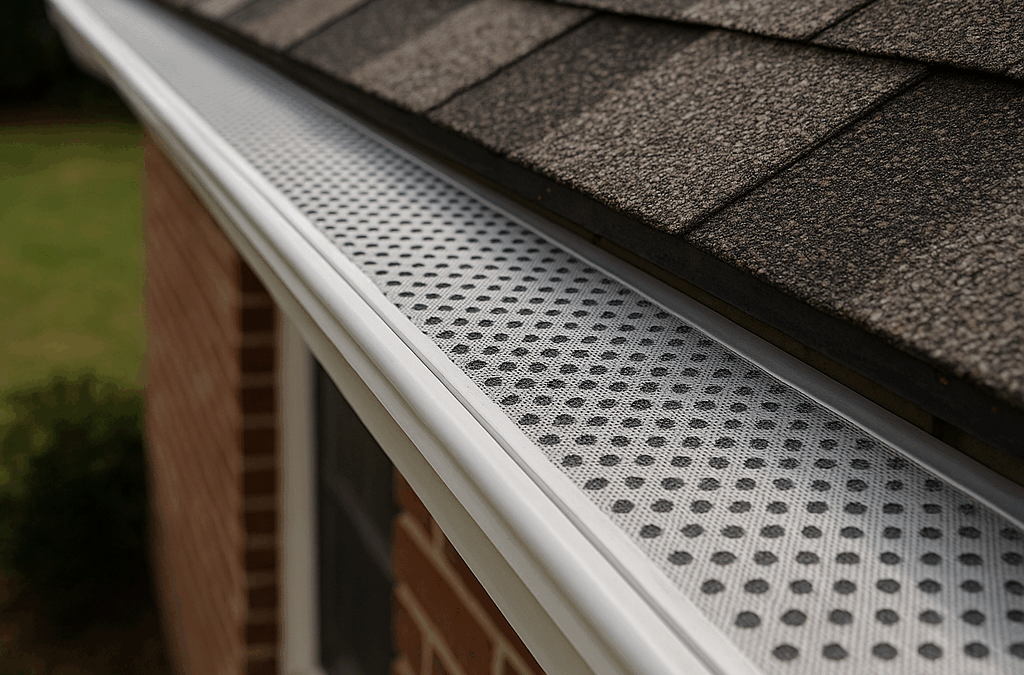
Screen and Mesh Gutter Guards represent the most common and widely available category. These products install over gutter openings, creating physical barriers preventing large debris from entering gutters. Basic screen guards use relatively coarse metal or plastic mesh with openings large enough to block leaves but permitting smaller debris passage. Micro-mesh guards use extremely fine mesh—sometimes with openings as small as 50 microns—that blocks even small debris including pine needles, shingle granules, and seed pods while allowing water to pass through surface tension. Screen and mesh systems range from inexpensive DIY products costing under $1 per foot to premium professionally installed systems costing $15-30 per foot or more.
Reverse Curve or Surface Tension Guards use a different fundamental principle. These products feature curved surfaces that water clings to, flowing around the curve and into the gutter opening through surface tension. Debris theoretically slides off the curved surface and falls to the ground rather than entering gutters. Reverse curve systems often feature more substantial construction than simple screens, typically requiring professional installation for optimal performance. Their effectiveness depends significantly on proper installation angle and compatibility with specific roof pitches.
Foam Gutter Inserts consist of porous foam material shaped to fill the gutter channel. Water passes through the foam material while debris sits on top, theoretically blowing away or decomposing. Foam inserts are typically inexpensive and easy to install without professional assistance. However, they present significant limitations in Memphis’s climate—debris accumulates within foam pores, seeds germinate inside foam creating plant growth within gutters, and foam degrades over time requiring periodic replacement.
Brush Inserts work similarly to foam, using cylindrical brush components that fill gutter channels. Water flows through the bristles while debris collects on top of the brush. Like foam inserts, brush systems work reasonably well initially but collect fine debris and seeds within bristles over time, creating maintenance challenges. They require periodic removal and cleaning to function properly, somewhat defeating their maintenance-reduction purpose.
Solid Cover Guards with front-opening channels use surface tension to direct water into a narrow slot while preventing debris entry. These systems often feature more robust construction than simple screens, providing better protection against large debris and physical damage. Performance varies based on rainfall intensity, with very heavy rain potentially overwhelming surface tension and causing water to overshoot gutters entirely—a significant consideration in Memphis where intense thunderstorms deliver extremely high rainfall rates.
Why Memphis’s Conditions Create Specific Gutter Guard Challenges
Memphis’s environment creates particular challenges for gutter guard performance. The region’s abundant tree canopy includes numerous species producing challenging debris types. Sweetgum balls—the spiky seed pods from sweetgum trees extremely common throughout Memphis—represent a particular problem, as their size and shape cause them to lodge in many gutter guard designs rather than falling off cleanly. Pin oak leaves, another Memphis staple, are small enough to pass through coarser mesh openings. Memphis’s large tulip poplar population drops substantial debris including large leaves and seed clusters throughout the year.
Memphis’s humid subtropical climate creates conditions where organic material doesn’t simply dry and blow away—it remains moist, heavy, and prone to decomposition. Debris accumulating on gutter guard surfaces decomposes into a fine organic paste that clogs micro-mesh openings and requires cleaning just as gutters themselves require cleaning without guards. The region’s year-round mild temperatures mean biological activity never fully stops, with seeds germinating in accumulated debris on guard surfaces even during winter months.
Intense summer thunderstorms delivering extremely high rainfall rates test gutter guard water-handling capacity. Systems designed for moderate rainfall rates may allow water to overshoot gutters during Memphis’s characteristic heavy downpours, defeating the system’s purpose of directing water through proper drainage channels.
Genuine Benefits Gutter Guards Provide
Despite their limitations and variability, quality gutter guards provide genuine benefits worth considering. High-quality micro-mesh systems significantly reduce maintenance frequency for homeowners with heavy tree coverage, potentially reducing cleaning needs from four times annually to once or twice. Gutter guards prevent large debris accumulation that causes complete blockages requiring emergency cleaning, protecting homes from immediate water damage risks.
Guards reduce pest attraction by preventing standing water and debris accumulation that attract mosquitoes, birds, and rodents seeking nesting material. Some systems reduce ice dam formation in winter by preventing water-holding debris from creating conditions where ice builds up at gutter edges. Guards protect gutter channels from physical debris impact that can dent or damage aluminum gutters over time. Quality systems extend overall gutter system lifespan by reducing the standing moisture and biological activity that accelerate corrosion.
Important Limitations and Realistic Expectations
Homeowners considering gutter guards benefit from understanding realistic expectations rather than marketing promises. No gutter guard system completely eliminates maintenance requirements—even the highest-quality systems require periodic inspection and some cleaning. Fine debris including pollen, shingle granules, and decomposed organic material eventually accumulates in or on any system, requiring attention.
Installation quality significantly affects performance. Even excellent gutter guard products installed incorrectly underperform their potential. Guards installed at improper angles, with gaps, or over damaged gutters will fail to provide expected protection. Professional installation using appropriate products for specific home conditions maximizes the likelihood of satisfactory performance.
Cost-effectiveness varies significantly based on specific circumstances. Homes with minimal tree coverage may find gutter guards provide limited practical benefit relative to their cost. Properties heavily surrounded by trees producing problematic debris may find quality guards provide excellent value through reduced maintenance costs and prevented water damage.
Selecting Appropriate Gutter Guards
Choosing appropriate gutter guards requires honest evaluation of specific property conditions. Tree species surrounding the property determine debris types requiring management—different trees produce different debris sizes, shapes, and volumes requiring different guard approaches. Roof pitch affects water flow velocity and volume, influencing which guard types handle rainfall adequately. Existing gutter size, condition, and configuration affect which systems can be properly installed.
Quality matters enormously in gutter guard selection. Inexpensive plastic screen products available at hardware stores rarely provide satisfactory long-term performance, often warping, cracking, or becoming clogged quickly. Premium products using stainless steel micro-mesh, robust aluminum frames, and proper installation hardware consistently outperform economy alternatives despite higher costs.
Conclusion
Gutter guards represent a potentially valuable investment for Memphis, Tennessee homeowners seeking to reduce maintenance burdens and protect their properties from water damage associated with clogged gutters. Tiger Gutters understands that Memphis-area homeowners benefit from approaching gutter guard decisions with realistic understanding of available product types, genuine performance expectations, and awareness of how local conditions including Memphis’s diverse tree canopy, intense rainfall, and humid climate affect guard performance. The wide variation in product quality, design approaches, and real-world effectiveness makes informed evaluation essential—understanding the distinctions between screen, micro-mesh, reverse curve, foam, and brush systems empowers homeowners to make decisions aligned with their specific property conditions, maintenance preferences, and budget parameters.