
Most Memphis, Tennessee homeowners think about gutters only when they overflow, leak, or pull away from the roofline. What rarely comes to mind is the subtle but critically important factor of gutter slope—the slight downward angle along which gutters must be positioned for water to flow correctly toward downspouts. This seemingly minor installation detail has enormous consequences for how well a gutter system performs, how long it lasts, and how effectively it protects a home from water damage. Tiger Gutters understands that educating Memphis-area homeowners about gutter slope and pitch helps property owners recognize problems early, make informed decisions about installation and repair, and appreciate why professional expertise matters when it comes to something as precise as proper gutter alignment.
What Gutter Slope and Pitch Mean
Gutter slope, sometimes called gutter pitch, refers to the deliberate downward angle built into a gutter run from one end to the other. Unlike a perfectly level surface, a properly installed gutter is not horizontally flat—it tilts gradually downward in the direction of the downspout so that gravity pulls water along the channel toward the drainage outlet. This angle is intentional, calculated, and essential for the gutter system to function as designed.
The standard recommendation for gutter slope is approximately one-quarter inch of vertical drop for every 10 feet of horizontal gutter run. This means that for a 40-foot gutter section, the end nearest the downspout should sit approximately one inch lower than the opposite end. While this difference sounds minor, it creates the consistent water movement needed to prevent standing water, debris accumulation, and the host of problems that result from inadequate drainage.
Gutter slope is distinct from roof pitch, though the two are related concepts. Roof pitch describes the steepness of the roof surface itself, which affects how quickly water moves off the roof and enters the gutter. Gutter slope describes the angle of the gutter channel itself. Both factors influence how efficiently water moves through the complete drainage system, and professionals must account for both when designing and installing gutters.
Why Gutter Slope Matters Specifically in Memphis
Memphis, Tennessee receives approximately 54 inches of rainfall annually, making it one of the wetter cities in the mid-South. The city experiences frequent and sometimes intense thunderstorms, particularly during spring and early summer, capable of delivering large volumes of water in short periods. Under these conditions, a gutter system that drains slowly or develops standing water creates immediate and compounding problems.
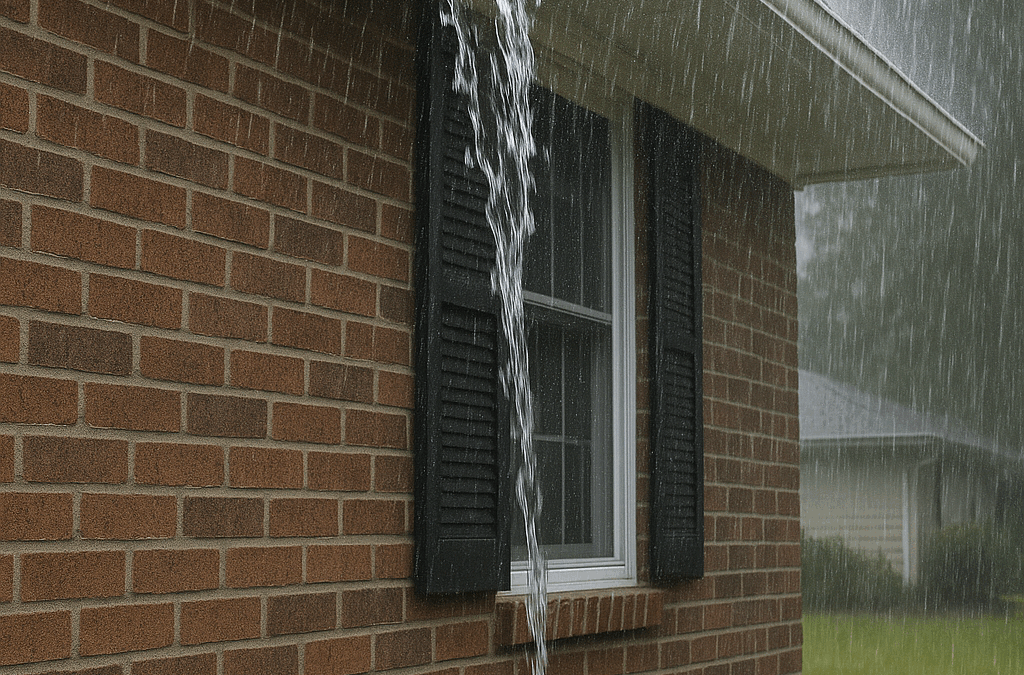
When rainfall rates exceed a gutter’s drainage capacity due to inadequate slope, water overflows the gutter channel rather than flowing toward downspouts. This overflow sends water cascading against the home’s fascia boards, siding, and foundation—exactly what gutters are designed to prevent. In Memphis’s humid subtropical climate, wood components that receive repeated water exposure deteriorate rapidly. Fascia rot, soffit damage, and foundation moisture intrusion are common consequences of chronic gutter overflow caused by improper slope.
Memphis’s warm climate also accelerates the biological activity that occurs in standing water. Gutters that hold water due to insufficient slope become breeding grounds for mosquitoes, which thrive in even small amounts of stagnant water. The city’s year-round mild temperatures mean that biological growth in standing water never truly stops, creating persistent pest and hygiene concerns alongside structural damage risks.
The region’s occasional winter freezes add another dimension to the importance of proper gutter slope. Water that pools in insufficiently sloped gutters during a freeze can expand as ice, stressing gutter fasteners, bending gutter profiles, and creating ice formations that damage roofing materials. Proper slope ensures water drains completely during rainfall, leaving gutters dry and less vulnerable when temperatures drop.
The Problems Caused by Incorrect Gutter Slope
Standing Water and Debris Accumulation: When gutters lack adequate slope, water drains slowly or not at all, creating persistent pools of standing water inside the channel. This standing water accelerates corrosion in metal gutters, degrades sealants at joints and corners, and creates conditions where leaves, seeds, and organic material decompose into a dense sludge that further restricts water flow. Over time, this self-reinforcing cycle of poor drainage and debris accumulation leads to complete blockages.
Sagging and Structural Failure: The weight of standing water combined with accumulated debris places excessive loads on gutter hangers and fasteners. Standard water weighs approximately 8.3 pounds per gallon, and a section of gutter holding standing water can accumulate significant weight quickly. This excessive load causes gutter hangers to pull away from fascia, leading to visible sagging and eventual structural failure of the gutter run. Once gutters begin sagging, the slope problem worsens as low points collect even more standing water.
Fascia and Soffit Damage: Gutters that overflow due to slope-related drainage failure repeatedly expose fascia boards and soffit panels to water they were never designed to handle directly. In Memphis’s humid climate, this repeated moisture exposure causes paint failure, wood rot, and eventual structural deterioration requiring expensive replacement. The damage often progresses slowly, remaining hidden behind gutters until it has become extensive.
Foundation and Landscape Issues: Water that overflows gutters or drains too slowly concentrates near the home’s foundation rather than being carried away through downspouts and appropriate drainage. This concentrated moisture creates hydrostatic pressure against foundation walls, contributes to basement water infiltration, and damages landscaping through erosion and root saturation.
What Causes Gutter Slope to Become Incorrect
Gutter slope problems develop from multiple sources. Improper original installation represents the most fundamental cause—gutters installed without careful attention to slope, using inadequate reference tools, or by inexperienced contractors may never have had correct pitch. These systems perform poorly from day one, though the full consequences may take time to become obvious.
Even correctly installed gutters can lose proper slope over time. Seasonal temperature changes cause the wood fascia boards to which gutters attach to expand, contract, and eventually shift. This movement gradually changes gutter alignment. The weight of accumulated debris and standing water bends gutter profiles and stresses hangers, causing progressive sagging. High winds during Memphis’s frequent severe weather events can physically displace gutters from their original positions. Over years of service, these cumulative effects frequently result in gutters that have lost their original correct slope.
Hanger spacing and quality also affect slope maintenance. Gutters installed with hangers spaced too far apart lack sufficient support to maintain their shape and alignment under load. Premium hangers installed at appropriate intervals—typically every 24 to 36 inches—provide the support needed to maintain consistent slope over time.
How Professionals Assess and Correct Gutter Slope
Evaluating gutter slope requires more than visual inspection, though visible sagging is an obvious indicator of slope problems. Professionals use levels, measuring tools, and practical water testing to assess whether slope throughout a gutter run meets the standard quarter-inch-per-10-feet specification. Water flow testing during or after rainfall reveals drainage rates and identifies locations where water pools or moves sluggishly.
Correcting slope problems may involve adjusting or replacing existing hangers, adding supplemental support at problem areas, or in cases of significant misalignment, complete gutter reinstallation. The appropriate solution depends on the severity of slope deviation, the overall condition of existing gutters, and whether the root cause is installation error, fastener failure, or fascia movement. Correcting slope problems without addressing the underlying cause—such as deteriorated fascia that can no longer hold fasteners securely—results in temporary improvement followed by recurring problems.
Recognizing Gutter Slope Problems
Memphis homeowners can watch for several indicators suggesting slope issues. Water marks or staining on exterior walls below gutter locations suggest chronic overflow. Visible sagging of gutter sections, particularly toward the middle of long runs, indicates hanger failure and slope loss. Water dripping from gutter joints or end caps during rainfall rather than flowing to downspouts suggests drainage problems. After rainfall ends, standing water visible inside gutters—or the sound of dripping continuing long after rain stops—indicates inadequate slope.
Mosquito activity concentrated near rooflines, particularly during summer months, can also suggest standing water in gutters providing breeding habitat. While debris accumulation can cause the same symptoms, slope problems often underlie or contribute to the conditions that allow mosquitoes to establish breeding populations in residential gutters.
Conclusion
Gutter slope and pitch represent foundational performance factors that determine whether a gutter system successfully protects a home or merely provides the appearance of protection while water damage accumulates unseen. Tiger Gutters recognizes that Memphis, Tennessee homeowners benefit from understanding this essential concept—knowing that the slight downward angle toward downspouts is not incidental but precisely engineered to work with gravity and Memphis’s demanding rainfall conditions. From preventing fascia rot and foundation moisture intrusion to eliminating mosquito breeding habitat and avoiding structural gutter failure, correct slope affects virtually every aspect of gutter system performance. Homeowners who understand gutter slope can better recognize when something is wrong, appreciate the importance of professional installation and assessment, and make informed decisions about maintaining the drainage systems that protect their properties throughout Memphis’s wet and challenging climate.