
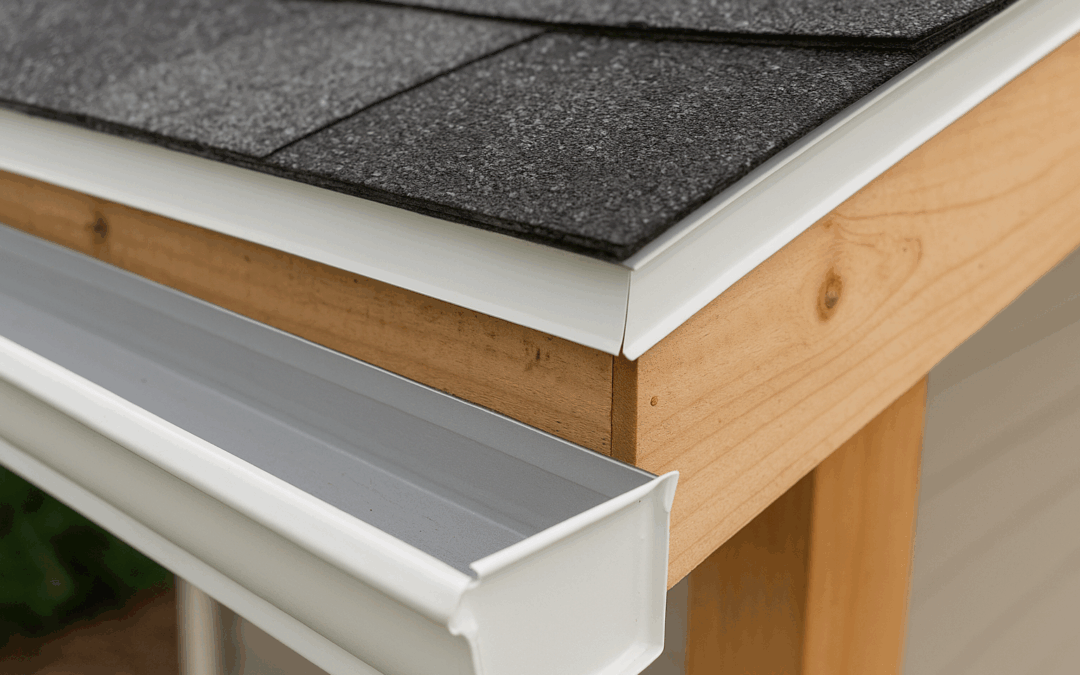
When Memphis, Tennessee homeowners think about roof and gutter protection, attention typically falls on visible components—shingles, gutters, downspouts, and fascia boards. A smaller but critically important component often goes completely unnoticed despite playing a significant role in directing water safely away from the roof edge and into the gutter system: the drip edge. Tiger Gutters recognizes that Memphis-area homeowners benefit from a thorough understanding of what drip edge is, how it functions within the broader roofline water management system, why Memphis’s climate makes its proper installation particularly important, and what problems develop when drip edge is absent, improperly installed, or allowed to deteriorate.
What Gutter Drip Edge Is
Drip edge is a formed metal flashing installed along the edges of a roof—typically at the eaves (lower horizontal edges) and the rakes (sloped gable edges)—designed to direct water runoff away from the roof deck and fascia, guiding it cleanly into the gutter system or away from the building envelope. It is manufactured from corrosion-resistant metals, most commonly aluminum, galvanized steel, or copper, and is formed into an L-shaped or T-shaped profile that fits over the roof edge with one leg lying beneath the shingles on the roof deck and the other extending downward over the fascia board.
The name “drip edge” describes its primary function: it creates a defined edge from which water drips cleanly rather than traveling by surface tension back along the underside of the roof decking toward the fascia. Without this defined break, water running off the roof edge follows the surface of the decking material by capillary action, traveling under and behind the fascia and into the eave space—creating exactly the hidden moisture damage that homeowners least expect and most struggle to identify before it becomes costly.
Drip edge comes in several profile types identified by letter designations—Type C (also called Type F or standard drip edge), Type D (T-style or drip edge with a wider flange), and Type L (with a longer vertical face)—each suited to specific roof edge geometries and installation requirements. Selecting the appropriate profile for a given application is part of proper installation practice, and local building codes in Tennessee and surrounding states increasingly specify drip edge installation as a requirement for both new construction and re-roofing projects.
The Role Drip Edge Plays in Roof Edge Water Management
Drip edge functions as an integration point between three separate roof system components: the roof deck and shingles above, the gutter system below, and the fascia board in between. Its correct installation ensures that water transitioning from the roof surface to the gutter makes this journey without contacting or infiltrating any of the structural wood components at the roof edge.
At the eave, correctly installed drip edge extends beneath the first course of shingles on top and over the front face of the fascia board below. This geometry ensures that water flowing down the roof surface passes beneath the shingle overhang, over the drip edge, and falls into the gutter channel rather than contacting the fascia directly. The metal surface of the drip edge provides a path that breaks the capillary attraction that would otherwise pull water back against the wood fascia. When gutters are present, the drip edge positions water’s point of departure directly above the gutter channel, maximizing the proportion of roof runoff that enters the gutter rather than missing it.
At the rake—the sloped edges along gable ends—drip edge installation prevents wind-driven rain from getting beneath shingles at the roof edge and directs water away from the rake board below. Rake drip edge is installed over the underlayment and beneath the shingles, providing a metal barrier at the most wind-exposed edges of the roof where water infiltration risk is highest during storms.
Why Memphis’s Climate Makes Drip Edge Especially Important
Memphis receives approximately 54 inches of annual rainfall—among the highest averages in the mid-South—delivering substantial cumulative water volume across the roofline throughout the year. High-intensity thunderstorms, common during Memphis’s spring and summer seasons, produce rapid water flow rates across roof surfaces that test the water management capacity of every roof edge component. In these high-flow conditions, the precision of water direction at the roof edge becomes more significant—small gaps or misalignments that cause negligible problems during light rain create meaningful water infiltration during intense events.
Memphis’s warm, humid subtropical climate creates conditions where any moisture that reaches wood components at the roof edge—fascia boards, roof decking edges, rafter tails—faces active biological deterioration pressure from the fungal and bacterial activity that warm, moist wood supports. Unlike drier climates where wood that occasionally gets wet dries relatively quickly and biological activity remains limited, Memphis’s warm temperatures and high humidity maintain deterioration-friendly conditions for extended periods. This means the moisture intrusion that missing or improperly installed drip edge allows has more severe and faster-developing consequences in Memphis than in drier or cooler climates.
Memphis’s severe weather seasons—including spring tornado watches, high-wind thunderstorm events, and occasional significant rain events from Gulf moisture surges—mean that Memphis rooflines regularly face conditions where wind-driven rain pushes against roof edges from unexpected angles. Drip edge provides the mechanical barrier at these vulnerable edge locations that prevents wind-driven moisture from exploiting the gaps and transitions that exist at every roof edge.
Problems That Develop Without Proper Drip Edge
Fascia Rot and Structural Deterioration: Without drip edge directing water away from the fascia, roof runoff repeatedly contacts the fascia board surface and travels behind it. In Memphis’s climate, fascia boards experiencing this chronic moisture contact develop rot that progressively weakens their ability to hold gutter fasteners—ultimately causing gutter failure in addition to requiring expensive fascia replacement.
Roof Deck Edge Damage: Water traveling behind the fascia also contacts roof decking edges, where moisture absorption into plywood or OSB decking causes swelling, delamination, and eventual structural softening. Roof deck edge damage is expensive to repair because it requires lifting shingles, removing damaged decking sections, and re-roofing the affected areas.
Soffit and Eave Space Moisture: Moisture that infiltrates the eave space through the roof edge creates elevated humidity conditions behind soffit panels. This hidden moisture causes deterioration of soffit materials, contributes to attic humidity problems, and can establish conditions for mold growth in the eave space that affects indoor air quality.
Undermined Gutter Performance: When water travels behind the gutter rather than into it—a consequence of roof edge geometry that drip edge would correct—the fundamental purpose of the gutter system is defeated. Water bypassing the gutter reaches the fascia, soffit, and foundation perimeter exactly as it would with no gutters installed.
Shingle Edge Damage: Without drip edge support beneath the first shingle course at the eave, shingles overhang unsupported roof deck at the edge. This unsupported overhang is vulnerable to wind lifting and physical damage, and the lack of a solid edge backing accelerates shingle deterioration at the most exposed point of the roof surface.
Identifying Drip Edge Problems
Memphis homeowners can look for several indicators suggesting drip edge is absent, damaged, or improperly installed. Water staining on fascia boards below the roofline edge suggests roof runoff is contacting the fascia rather than entering the gutter. Fascia paint failing in a pattern concentrated at the upper edge near the roofline—rather than uniformly across the surface—suggests water is running behind the gutter and over the fascia top repeatedly. Visible gaps between the shingle edge and the gutter back wall, or visible daylight between the roof deck edge and the fascia top, suggest the roof edge geometry lacks proper drip edge integration.
During reroofing projects or after significant storm damage, inspecting the exposed roof edge for drip edge presence and condition provides direct confirmation of whether this component is performing its protective function.
Conclusion
Gutter drip edge is a small component with a significant protective role in the complete water management system of any Memphis, Tennessee home. Tiger Gutters understands that Memphis-area homeowners benefit from recognizing how drip edge integrates the roof surface, fascia, and gutter system into a continuous water pathway, why Memphis’s substantial rainfall, warm climate, and severe weather seasons make proper drip edge installation particularly important, and what problems develop when this often-overlooked component is absent or improperly installed. Understanding drip edge as part of the complete roofline system—rather than as an isolated accessory—helps Memphis homeowners appreciate the full scope of roofline water management and the role every component plays in protecting their homes from the consequences of uncontrolled roof edge water.