
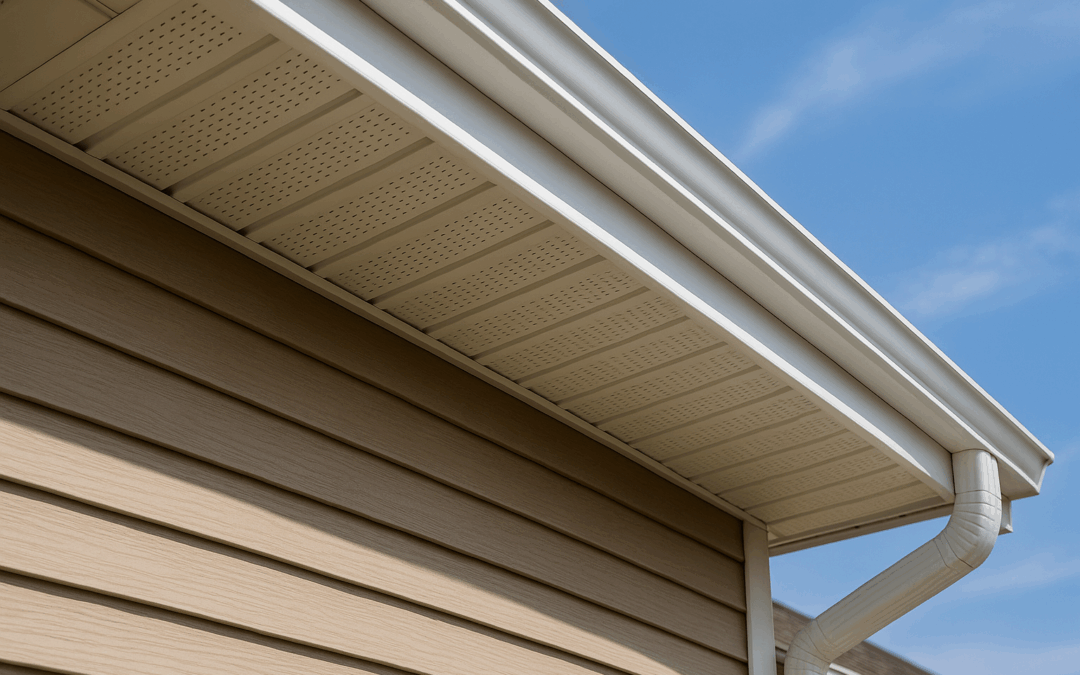
When Memphis, Tennessee homeowners consider exterior home improvements or repairs, roofing and siding typically dominate the conversation. However, another critical component deserves equal attention—the soffit, specifically vinyl soffit, which has become the predominant material choice for this essential architectural element. Tiger Gutters regularly discusses vinyl soffit with Memphis-area property owners who want to understand this material’s characteristics, benefits, and limitations. A thorough understanding of vinyl soffit—what it is, why it has gained popularity, and how it performs in regional climate conditions—helps homeowners make informed decisions about their property’s exterior protection and maintenance.
Understanding Vinyl Soffit
Soffit refers to the finished material installed on the underside of roof overhangs where eaves extend beyond exterior walls. Looking upward from ground level at your home’s eaves, the horizontal surface spanning between the exterior wall and the fascia board is the soffit. Vinyl soffit specifically describes this component when manufactured from polyvinyl chloride (PVC) plastic rather than traditional wood, aluminum, or fiber cement materials.
Vinyl soffit emerged as a popular building material beginning in the 1960s and has since become the dominant soffit choice in residential construction and renovation projects. This popularity stems from several characteristics that distinguish vinyl from traditional materials. Vinyl soffit is manufactured through extrusion processes that create consistent profiles in various styles mimicking traditional wood patterns including smooth finishes, woodgrain textures, and beadboard appearances. The material comes in numerous colors baked into the vinyl during manufacturing, eliminating the need for painting.
Like all soffit materials, vinyl serves both aesthetic and functional purposes. Visually, it creates a clean, finished appearance concealing roof framing members and the underside of roof decking. Functionally, vinyl soffit closes gaps between roof structures and exterior walls, preventing pest intrusion into attic spaces. Most importantly, perforated vinyl soffit panels facilitate essential attic ventilation by allowing fresh air to enter at the eaves while hot air escapes through ridge or gable vents, creating circulation that reduces heat buildup and controls moisture.
Vinyl Soffit Advantages in Memphis’s Climate
Memphis’s humid subtropical climate creates specific conditions where vinyl soffit’s characteristics offer distinct advantages over traditional materials. The region experiences hot, humid summers with temperatures regularly reaching the low to mid-90s and relative humidity frequently exceeding 70%. Winters bring temperature fluctuations, occasional freezing, and significant precipitation. Annual rainfall averaging 54 inches means soffit faces regular moisture exposure.
Vinyl’s primary advantage lies in its inherent moisture resistance. Unlike wood, which absorbs water and subsequently rots, or steel, which corrodes when protective coatings fail, vinyl is impervious to moisture. It will not absorb water, swell, warp, or support biological growth like mold, mildew, or wood-decay fungi. In Memphis’s humid environment where moisture-related deterioration constantly threatens wood products, vinyl’s resistance to these problems represents a significant benefit.
Vinyl requires virtually no maintenance compared to wood soffit, which demands regular painting, sealing, and repairs. Vinyl never needs painting—the color is integral to the material itself. While vinyl can accumulate dirt, mold, or mildew on its surface, simple washing with mild detergent typically restores appearance. This low-maintenance characteristic appeals to homeowners seeking to minimize ongoing exterior upkeep requirements.
Vinyl soffit resists insect damage that commonly affects wood materials. Carpenter bees cannot bore into vinyl, termites cannot consume it, and wood-boring beetles find no purchase. This immunity to pest damage proves particularly valuable in Memphis where insect activity remains high throughout much of the year.
Cost represents another vinyl advantage. Vinyl soffit materials typically cost significantly less than wood, fiber cement, or aluminum alternatives. Combined with relatively straightforward installation processes, vinyl offers economical solutions for new construction and replacement projects.
Vinyl Soffit Limitations and Considerations
Despite its advantages, vinyl soffit has limitations that Memphis homeowners should understand. Temperature extremes affect vinyl differently than other materials. In intense summer heat, vinyl can become somewhat pliable and may sag slightly if improperly installed or if fasteners are over-tightened. More significantly, extreme cold makes vinyl brittle. While Memphis rarely experiences prolonged severe cold, occasional winter temperature drops can make vinyl vulnerable to cracking if impacted during cold snaps.
Thermal expansion and contraction occur with vinyl more dramatically than with most other building materials. A twelve-foot vinyl soffit panel can expand or contract by half an inch or more across temperature ranges Memphis experiences seasonally. Proper installation must account for this movement by allowing expansion gaps at panel ends and avoiding over-fastening that restricts movement. When installed incorrectly, thermal movement can cause panels to buckle, warp, or pull loose from mounting systems.
Color limitations and fading represent aesthetic considerations. While vinyl soffit comes in various colors, the selection is more limited than paint color options available for wood. Additionally, vinyl colors can fade over time due to ultraviolet radiation exposure, though modern vinyl formulations include UV inhibitors that significantly reduce fading compared to earlier products. Dark colors tend to fade more noticeably than lighter shades.
Vinyl cannot be repainted. Once vinyl soffit fades or if homeowners desire color changes, the only option is complete replacement. This differs from wood or fiber cement, which can be refreshed or changed through new paint applications.
Environmental concerns surround vinyl production and disposal. PVC manufacturing involves chemicals and processes with environmental impacts. At the end of its service life, vinyl soffit contributes to landfill waste, though recycling programs for vinyl building materials are expanding.
Appearance authenticity matters to some homeowners. While vinyl can mimic wood grain patterns, close inspection reveals its synthetic nature. For historic homes or properties where maintaining authentic materials matters, vinyl’s artificial appearance may detract from architectural integrity.
Vinyl Soffit Types and Styles
Vinyl soffit is available in several configurations serving different functional and aesthetic needs. Solid vinyl soffit panels contain no perforations and provide weather protection without ventilation. These panels typically install in areas where ventilation is not required, such as porch ceilings or areas where attic ventilation is achieved through other means.
Fully perforated vinyl soffit features ventilation holes across the entire panel surface, maximizing airflow into attic spaces. This type works well in climates requiring substantial ventilation and on homes with adequate roof ventilation systems to exhaust the incoming air. Memphis homes with ridge vents or powered attic ventilation often benefit from fully perforated soffit.
Partially perforated vinyl soffit, sometimes called “center vent” panels, features a perforated strip down the panel center with solid sections along the edges. This design balances ventilation needs with structural appearance and is among the most common vinyl soffit types in residential applications.
Style-wise, vinyl soffit comes in smooth finishes, woodgrain textures that simulate natural wood appearance, and beadboard patterns featuring vertical grooves creating traditional decorative appearances. Panel widths vary, with common sizes including twelve-inch and sixteen-inch configurations that affect the visual scale and installation requirements.
Installation Considerations
Proper vinyl soffit installation is critical to performance and longevity. Unlike wood soffit, which can be nailed tightly in place, vinyl requires installation techniques accommodating thermal movement. Fasteners should be centered in nailing slots rather than at slot ends, allowing panels to move. Nails or screws should not be driven tightly—leaving approximately 1/32 inch between fastener heads and panel surfaces allows necessary expansion and contraction.
Expansion gaps of approximately 1/4 inch should be maintained where panel ends meet trim or accessories, increasing slightly for installations during cold weather when panels are contracted. Panels installed during Memphis summer heat are already expanded, requiring less gap allowance, while winter installations need larger gaps to accommodate summer expansion.
Proper ventilation area calculations ensure adequate attic airflow. Building codes typically require one square foot of net free ventilation area for every 150 square feet of attic space, with balanced intake (soffit) and exhaust (ridge or gable) ventilation. Selecting appropriate perforated soffit ratios ensures code compliance and optimal attic climate control.
Maintenance and Cleaning
Vinyl soffit maintenance primarily involves periodic cleaning to maintain appearance. Memphis’s humid climate promotes mold and mildew growth on all exterior surfaces, including vinyl. Annual or biannual washing with solutions of mild detergent or specialized vinyl siding cleaners removes biological growth, dirt, and environmental contamination. Soft brushes or low-pressure washing effectively clean vinyl without causing damage.
Inspecting vinyl soffit periodically identifies potential problems. Check for loose panels, damaged sections, or areas where thermal movement has caused separation from trim. Verify that perforations remain clear and unobstructed by insect nests, paint overspray from other projects, or accumulated debris. Look for cracks, particularly after severe weather events or during winter months when material brittleness increases.
Minor repairs typically involve replacing damaged individual panels rather than attempting repairs. Vinyl panels interlock and can usually be removed and replaced without disturbing surrounding sections. Maintaining extra panels from original installation allows matching replacements when discontinuation makes finding exact matches difficult.
Comparison with Alternative Soffit Materials
Understanding vinyl soffit benefits from comparing it with alternatives. Wood soffit offers authentic appearance and can be painted any color but requires regular maintenance, is susceptible to rot and insects, and costs more long-term when maintenance is factored. Aluminum soffit provides excellent durability and fire resistance, never needs painting, and resists weather extremely well but costs significantly more than vinyl and can dent from hail or impact. Fiber cement soffit combines durability with paintability and authentic appearance but weighs much more, costs considerably more, and requires periodic repainting like wood.
Vinyl occupies a middle ground—more durable and lower maintenance than wood, more affordable than aluminum or fiber cement, but with aesthetic limitations and temperature sensitivity that other materials don’t share. For many Memphis homeowners, vinyl’s combination of affordability, low maintenance, and adequate performance makes it the practical choice despite some compromises.
Conclusion
Vinyl soffit has become the predominant choice for residential soffit applications in Memphis, Tennessee, and throughout the region, offering homeowners a practical balance of affordability, durability, and low maintenance requirements. Tiger Gutters understands that Memphis-area property owners who comprehend vinyl soffit’s characteristics, advantages, and limitations can make better-informed decisions about new construction, renovation, or replacement projects. While vinyl soffit may not suit every application or aesthetic preference, its resistance to moisture, insects, and rot combined with minimal maintenance needs make it an appropriate choice for many homes throughout Memphis. Whether building new, replacing deteriorated wood soffit, or simply seeking to understand existing exterior components, knowledge about vinyl soffit characteristics and performance in regional climate conditions supports wise property stewardship decisions.