
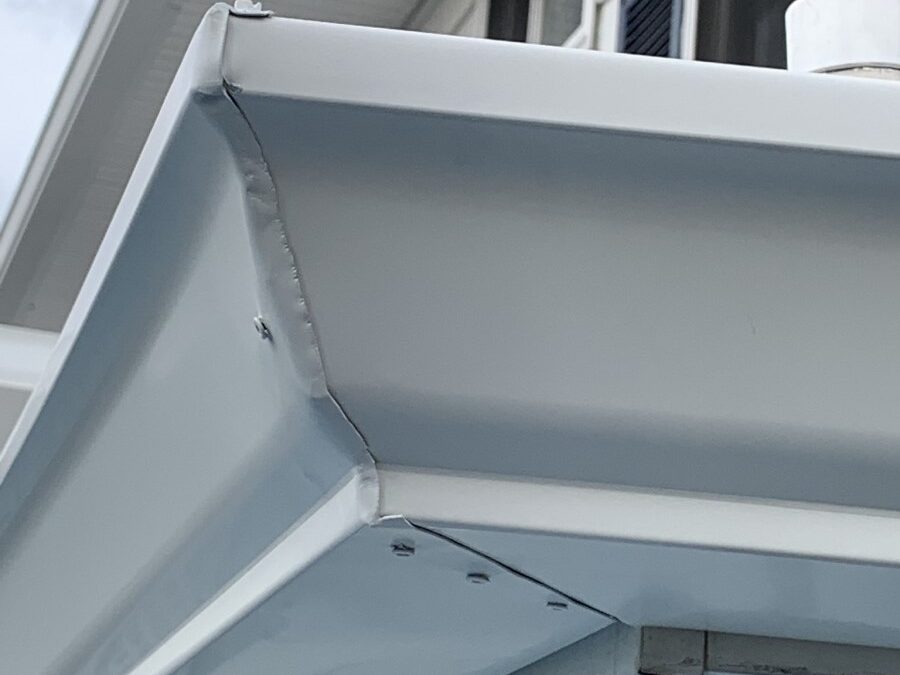
Gutter corners may seem like minor details compared with long gutter runs and downspouts, but they are among the most important connection points in a residential drainage system. Every time a gutter turns around a roof corner, an inside or outside miter connects two sections and directs water along the roofline. These connections must remain properly aligned, sealed, and supported to prevent leaks, overflow, and moisture exposure behind the gutter. For Tiger Gutters and homeowners in Memphis, Tennessee, understanding gutter corners and miters can make it easier to recognize why leaks often appear near roofline turns and why regular inspection matters in the Mid-South’s rainy, humid climate.
What Is a Gutter Miter?
A gutter miter is the angled corner piece that connects two gutter sections where the roofline changes direction. Miters allow water to continue flowing through the system rather than stopping at a corner. They are generally installed at either 90-degree angles or custom angles that match the roof design.
There are two primary types of gutter miters:
- Outside miters wrap around an outward-facing corner of the home. These are common where two exterior walls meet at a protruding corner.
- Inside miters connect gutters at an inward-facing corner. These are commonly found where rooflines meet around an inside corner, a porch connection, or an L-shaped section of the home.
Both types have an important job. They must carry runoff around the roofline while remaining watertight. Unlike a long seamless gutter run, which may have few joints, every miter is a connection point that relies on careful assembly and sealant.
Why Gutter Corners Are Common Leak Locations
Water naturally follows the path of least resistance. When it reaches a gutter corner, it is pushed through an angled connection that may receive a large amount of roof runoff. If sealant has aged, metal has shifted, or debris has accumulated near the miter, water may escape through small openings.
Memphis homeowners may notice corner leaks during heavy thunderstorms rather than light rain. A minor separation at a miter might not leak when the gutter carries only a small amount of water. During a stronger storm, however, roof runoff can move rapidly through the channel and force water against the miter seam. This is why a gutter system may appear normal for much of the year but drip noticeably from a corner during intense rainfall.
Miter leaks can also develop gradually. Seasonal heat causes aluminum gutters to expand, while cooler weather causes contraction. Memphis experiences long periods of summer heat along with cooler winter temperatures and occasional freeze events. Over many years, this movement can stress the sealant around corner connections. Wind, branch impact, and the weight of wet debris can also shift gutters enough to affect miter alignment.
Inside Miters and Concentrated Roof Runoff
Inside gutter miters often manage especially high volumes of water because they are commonly located where two roof planes direct runoff toward the same point. For example, an inside roof corner may collect water from a main roof section and an adjoining porch or addition. During a Memphis downpour, that concentrated runoff can place extra hydraulic pressure on the gutter corner.
If the gutter channel is partly blocked by leaves, sweetgum balls, pecan debris, roofing granules, or twigs, water may back up at the inside miter. Instead of flowing smoothly through the corner and toward the downspout, water can rise high enough to overflow the front or back of the gutter. Backward overflow is especially concerning because it may direct water behind the gutter and onto fascia boards or soffit materials.
Homeowners should also observe whether an inside miter is located below a roof valley. Roof valleys direct water from two sloped roof surfaces into one concentrated location. When that flow enters a gutter near an inside corner, the combined water volume can reveal limitations involving gutter slope, debris buildup, downspout capacity, or miter condition.
Outside Miters and Visible Corner Drips
Outside miters are often easier to notice because they wrap around visible exterior corners. When an outside miter leaks, homeowners may see water dripping from the bottom of the corner, dark staining beneath it, or washed-out mulch near the wall.
A leaking outside miter may seem less serious than a larger gutter problem because the water is usually concentrated in one small area. However, repeated dripping from the same corner can create ongoing moisture exposure. Over time, this may stain siding or brick, wash away soil, damage landscaping, and contribute to saturated ground near the foundation.
In Memphis, where warm temperatures and humidity can support algae and biological growth on damp exterior surfaces, a persistently leaking corner may also produce dark or green staining below the gutter line. This staining does not always identify the exact cause by itself, but it is a reason to inspect the miter, nearby hanger condition, and gutter alignment.
Signs a Gutter Miter May Need Attention
Many miter issues can be recognized from the ground after rainfall. Homeowners should look for patterns rather than relying only on one visual clue.
Common signs include:
- Dripping from a gutter corner after rain
- Dark staining or mineral streaks below a corner
- Rust-colored marks around a seam on painted metal gutters
- Water overflowing at an inside corner
- Gaps or visible separation between connected gutter sections
- Loose or cracked sealant at the miter joint
- Sagging gutter sections near a corner
- Water stains on fascia or soffit near the connection
- Washed-out mulch or soil beneath a corner
- Repeated algae growth on the wall below the miter
A corner leak may also indicate a support problem. If the gutter is sagging near a miter because of loose hangers or weakened fascia, the seam may be placed under uneven stress. Repairing sealant without addressing the underlying alignment issue may not resolve the problem for long.
The Role of Sealant in Miter Performance
Gutter sealant creates the watertight barrier at miter joints, end caps, outlets, and other connections. For a sealant repair to perform as intended, the surfaces must be clean, dry, and properly aligned before it is applied.
Leaves, organic sediment, oxidation, and standing water can interfere with sealant adhesion. Applying new sealant over old, cracked material without preparing the surface may create only a temporary patch. Likewise, sealant cannot reliably compensate for gutter sections that are pulling apart, sagging, or attached to deteriorated fascia.
Memphis weather makes regular miter inspection useful because the combination of summer heat, humidity, rainfall, and seasonal movement can gradually affect sealed connections. Fall cleaning is an especially practical time to inspect corners because debris is removed and the system can be flushed to identify active leaks before winter rainfall and occasional ice conditions arrive.
Debris Buildup Around Corners
Corners can trap debris more easily than straight gutter runs. Leaves and twigs carried by water may settle at an angled connection, especially if drainage is slow or the gutter slope is inadequate. Sweetgum balls, pecan husks, and other larger debris common in Memphis landscapes can lodge near corner seams and downspout inlets.
When debris remains in a miter area, it holds moisture against the gutter surface and reduces the channel’s ability to carry water. It can also conceal a small leak until staining or overflow becomes visible below. Regular cleaning should include checking corners by hand rather than simply clearing the middle of long gutter runs.
Proper Support Near Gutter Corners
Miters should be supported so they remain aligned as water and debris move through the gutter system. If hangers are loose, missing, or spaced too far apart near a corner, the gutter can flex at the connection. That movement places additional stress on sealant and can eventually create gaps.
Support is particularly important at inside miters and roof valleys because those areas may receive concentrated runoff. A gutter section that is secure along a straight wall may still have a vulnerable corner if the miter lacks adequate support or if the fascia behind it has deteriorated from prior leakage.
Conclusion
Gutter corners and miters are small but essential components of a home’s roof drainage system. They guide water around changing rooflines and must remain sealed, aligned, and supported to prevent concentrated leaks and overflow. For Tiger Gutters and Memphis, Tennessee homeowners, watching for corner drips, staining, debris buildup, sagging, and water movement after storms can help identify miter-related issues before they contribute to fascia damage, landscape erosion, or unwanted moisture near the home. A well-maintained gutter system includes careful attention not only to long gutter runs and downspouts, but also to the corners where water changes direction.