
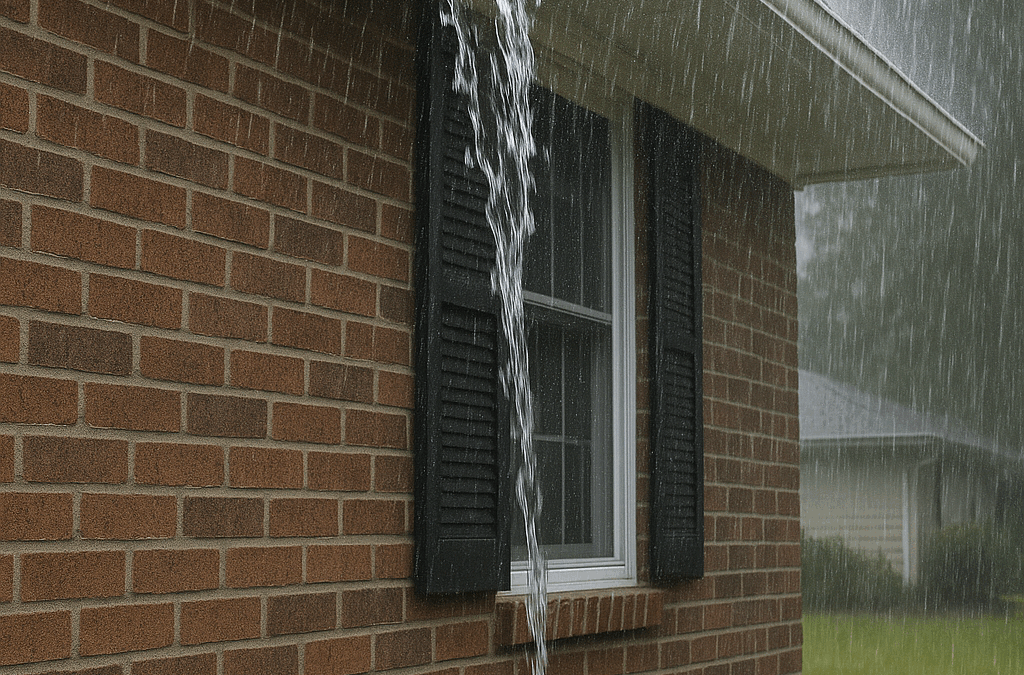
Water running behind a gutter instead of into it is a warning sign worth investigating. The cause may involve the metal flashing at the roof edge, the position of the gutter, debris that is restricting water flow, or the condition of the fascia board supporting the system. Because several roofline components meet in the same narrow area, the source is not always obvious from the ground.
For Memphis homeowners, the issue can become especially noticeable during a strong downpour. A light rain may produce only a small drip, while heavier rainfall can send a visible sheet of water down the fascia or exterior wall. Understanding the path that rainwater is supposed to follow can make the warning signs easier to recognize.
How Rainwater Should Move at the Roof Edge
As rain reaches the lower edge of a roof, it should leave the roofing surface and enter the gutter channel. The gutter then carries that runoff toward a downspout so it can be discharged at ground level.
Along many roof perimeters, a narrow strip of formed metal helps rain clear the edge and move toward the collection channel. This component is commonly called drip edge. A gutter apron can serve a related role by spanning part of the transition between the eave and gutter. The arrangement varies by roof, but the objective is consistent: runoff should reach the channel instead of slipping behind it.
When the transition is incomplete, damaged, or poorly aligned, water may follow the underside of the roof edge and reach the fascia before dropping away. This behavior is sometimes called surface tension or capillary action. Homeowners do not need to diagnose the technical cause themselves, but the visible water path provides useful information.
Common Reasons Water Appears Behind Gutters
1. The roof edge and gutter do not form a continuous water path
A gap between the roof-edge flashing and gutter can allow runoff to miss the channel. This does not necessarily mean the gutter itself is defective. The relationship among the shingles, drip edge or gutter apron, and gutter position may need to be considered as a complete assembly.
2. The gutter has shifted away from the fascia
Gutters depend on secure attachment and consistent alignment. If part of a run pulls away, even a small opening can become a path for water. From the ground, the affected section may look uneven, bowed, or farther from the roofline than adjacent sections.
3. Debris is causing water to back up
Leaves, twigs, seed pods, and roof granules can reduce the available space inside a gutter. During heavy rain, the water level may rise faster than the downspout can drain it. Although overflow commonly spills over the front edge, it can also appear near the back of the gutter and resemble a flashing problem.
This is one reason the system should be observed as a whole. If water appears behind the gutter only near a downspout or debris-filled section, restricted drainage may be contributing to the problem.
4. The gutter slope or position is uneven
Gutters are normally installed with a slight pitch toward their downspouts. If a section holds standing water or slopes away from an outlet, runoff may collect in one area and escape where the channel is lowest. Visible standing water after the rain stops is another clue that drainage may not be balanced.
5. The fascia board has deteriorated
The fascia board provides the mounting surface for many residential gutter systems. Repeated moisture exposure can contribute to peeling paint, staining, soft wood, or rot. Once the wood loses strength, gutter fasteners may no longer remain as secure as intended, allowing alignment problems to develop.
Water behind a gutter and fascia damage can therefore reinforce one another: misdirected water may keep the wood wet, while weakened wood may make it harder for the gutter to remain properly positioned.
Warning Signs Memphis Homeowners Can Check From the Ground
You may be able to spot useful evidence without climbing a ladder. Look for:
- Dark streaks or water stains directly below the gutter
- Peeling or blistered paint on the fascia
- Dripping between the gutter and roof edge during rain
- A gutter section that appears to sag or pull away
- Water marks concentrated around hangers or fasteners
- Damp soffit areas beneath the roof overhang
- Overflow despite water also moving through the downspout
- Soil erosion or splash marks below one part of the roofline
Observing the system during rainfall can help distinguish water that is going over the front from water traveling behind the gutter. Remain on the ground and avoid inspecting from a ladder during wet or windy conditions.
Does Water Behind the Gutter Mean You Need New Gutters?
Not necessarily. That symptom, by itself, cannot show whether the issue begins inside the channel, at the eave, or in the supporting wood.
If debris is restricting flow, cleaning the gutter and downspout may address that specific condition. If the transition at the roof edge is incomplete, the gutter apron or drip edge may deserve attention. If the mounting wood is damaged, the condition of the fascia may need to be considered before the gutter can remain securely positioned.
Some homes may have broader gutter condition or alignment problems. The visible symptom alone is not enough to determine whether cleaning, adjustment, work at the roof edge, fascia work, or a different gutter system is appropriate.
Fascia Repair and Fascia Wrap Are Different Services
Fascia board repair or replacement addresses the condition of the wooden roof-edge component. Fascia wrap and trim metal add an exterior metal covering around fascia wood. Although both services concern the same area of the home, they are not interchangeable.
If wood is already soft or deteriorated, covering the surface does not determine whether the underlying material can adequately support a gutter. The wood condition and water source should be considered separately from the appearance of fascia wrap or trim metal.
Frequently Asked Questions About Water Behind Gutters
Can clogged gutters make water run behind them?
Yes, they can contribute. A restriction may cause the channel to fill during a storm, and water can escape at the front, ends, corners, or back of the gutter. Cleaning may address debris, but it would not correct a separate flashing or alignment issue.
Can caulk close the gap behind a gutter?
Sealant may be useful in certain gutter applications, but applying caulk without identifying the water path may only conceal the symptom temporarily. A gap involving roof-edge flashing, gutter position, or damaged fascia may require a different approach.
Why is the problem visible only during heavy rain?
Light rainfall may stay within the capacity of a partially obstructed or imperfectly aligned system. A stronger Memphis storm produces runoff more quickly, making small gaps, low points, and drainage restrictions easier to see.
Should fascia condition be checked when gutters are replaced?
The fascia is commonly used to support the gutter, so its condition is relevant when new gutters are being considered. Visible staining, softness, loose fasteners, or peeling paint may indicate that the wood deserves closer attention.
Address the Water Path, Not Just the Drip
Water behind a gutter is best understood as a roof-edge drainage issue rather than a single-component failure. Drip edge, gutter apron, gutter position, fascia condition, channel capacity, and downspout flow can all influence what happens when rain reaches the eave.