
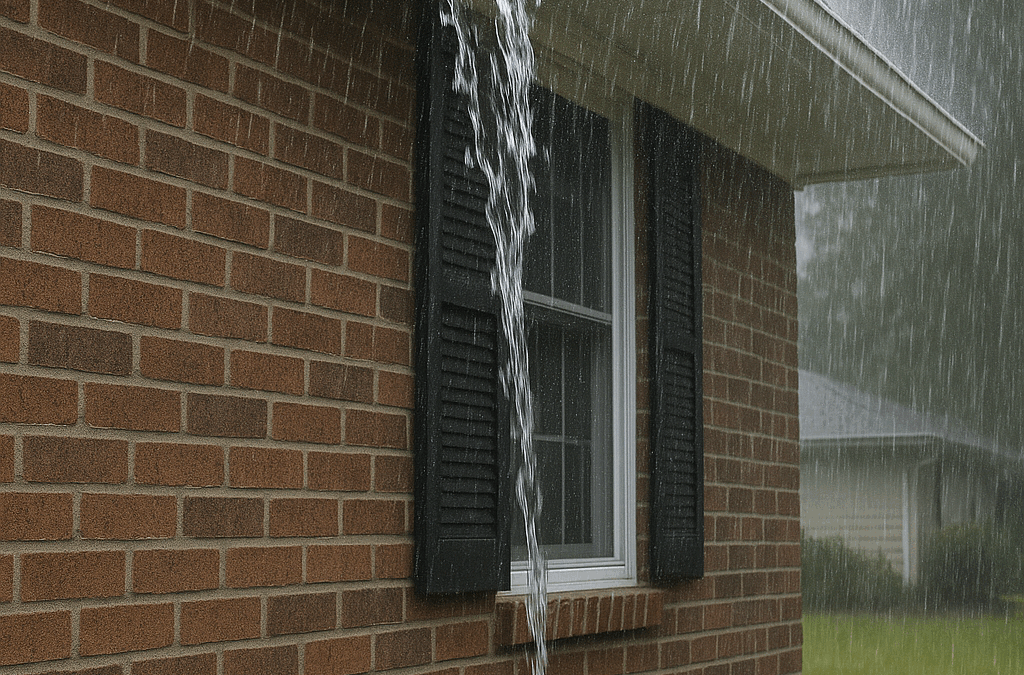
Of all the systems on a residential property, the foundation is simultaneously the most structurally critical and the most expensive to repair when something goes wrong. It is the element upon which every other component of the home depends — walls, floors, framing, roofing, and all the systems within them rest ultimately on the foundation’s stability and integrity. Yet foundation damage is frequently traced not to catastrophic events or unpredictable geological forces but to a much quieter and more preventable cause: water. Specifically, the chronic, concentrated deposition of roof surface runoff at the foundation perimeter that occurs when the gutter system designed to prevent it is absent, inadequate, or poorly maintained. Tiger Gutters believes that Memphis, Tennessee homeowners benefit from understanding the direct, mechanistic connection between gutter system performance and foundation health — how gutters protect the foundation, what happens when they fail to do so, and why Memphis’s specific soil conditions and rainfall environment make this connection more consequential here than in many other parts of the country.
How Roof Runoff Threatens the Foundation
To understand how gutters protect foundations, it is necessary to first understand the scale of the threat that roof surface runoff poses when it is not managed. A typical Memphis home has a roof surface area of 1,500 to 2,500 square feet or more. Every inch of rainfall that falls on that surface becomes runoff — water that flows across the shingles, reaches the eaves, and must go somewhere at ground level.
One inch of rainfall on 2,000 square feet of roof surface generates approximately 1,245 gallons of water. Memphis receives approximately 54 inches of annual rainfall — meaning a typical Memphis home’s roof generates tens of thousands of gallons of runoff annually that must be managed and directed away from the structure. When gutters are functioning properly, this runoff is collected at the eaves, channeled to downspouts, and discharged through extensions to points away from the foundation. When gutters are absent, blocked, or discharging at the foundation perimeter without extensions, this entire volume is deposited in concentrated streams directly adjacent to the foundation — with every significant storm event repeating this concentrated deposition cycle.
The foundation perimeter is precisely the location where concentrated water deposition is most damaging. Soil adjacent to the foundation, saturated repeatedly by roof runoff that is not being managed away from the home, undergoes the moisture cycling that drives the structural stresses responsible for foundation damage in Memphis’s specific geological and soil context.
Memphis’s Clay Soils: The Critical Factor
The reason gutter performance is so directly consequential for Memphis foundation health is the nature of the soil that surrounds virtually every residential foundation in the metropolitan area. Memphis’s soils are predominantly clay-bearing — part of the Mississippi River alluvial plain geology that underlies much of the mid-South. Clay soils have two characteristics that make foundation perimeter moisture management critically important.
Expansive Behavior: Clay minerals absorb water molecules between their platelet structures, causing the soil to swell in volume when wet. This expansion creates lateral and upward pressure on any structure in contact with the soil — including foundation walls and footings. The pressure generated by expanding clay soil against a foundation wall is substantial and, when applied repeatedly through wet-dry cycles, creates cumulative stress that contributes to wall cracking, inward wall movement, and footing disturbance over time.
Shrinkage on Drying: When clay soils dry, they lose the water molecules that caused expansion and contract — sometimes dramatically. This contraction creates voids and gaps beneath and adjacent to foundation elements that were supported by the soil in its expanded state. Differential settlement — uneven subsidence of the foundation as the soil contracts unevenly beneath different parts of the structure — is a common consequence of repeated clay soil shrink-swell cycling, and it produces the sticking doors, uneven floors, and diagonal wall cracks that many Memphis homeowners attribute to age but that are frequently driven by moisture cycling in the soil beneath.
The shrink-swell behavior of Memphis’s clay soils is driven by moisture — specifically, by the amplitude of wet-dry cycles the soil experiences at the foundation perimeter. Gutters that manage roof runoff effectively, keeping foundation perimeter soil at relatively stable moisture levels rather than subjecting it to the dramatic saturation-drying cycles that concentrated roof runoff creates, directly reduce the amplitude of the shrink-swell cycles that drive cumulative foundation stress in Memphis’s clay soil environment.
The Direct Gutter-to-Foundation Connection
The connection between gutter performance and foundation health is direct and mechanistic, not theoretical. It operates through several specific pathways that Memphis homeowners benefit from understanding.
Overflow Saturation: When gutters overflow — from debris blockage, slope loss, inadequate sizing, or missing extensions — roof runoff is deposited as concentrated streams at the foundation perimeter. In Memphis’s clay soils, this concentrated deposition creates rapid, deep saturation of the soil in direct contact with the foundation that far exceeds what natural rainfall on the adjacent ground surface would create. The intensity and repetition of this overflow-driven saturation drives the most severe shrink-swell cycling and the highest lateral foundation pressure of any surface drainage condition.
Hydrostatic Pressure on Basement Walls: For Memphis homes with basements — present in a portion of the metropolitan area’s housing stock, particularly in elevated terrain areas of East Memphis and older neighborhoods with varied topography — concentrated foundation perimeter saturation from gutter overflow creates hydrostatic pressure against basement walls. Water in saturated soil exerts pressure on any confining surface, and basement walls confine saturated soil on their exterior faces. This hydrostatic pressure works through every available pathway — cracks, mortar joints, wall-footing interfaces — driving moisture intrusion into the basement that may range from seepage to active water entry depending on the degree of saturation and wall condition.
Crawl Space Moisture: Many Memphis homes are built on crawl space foundations rather than full basements. Foundation perimeter saturation from gutter overflow raises the moisture content of the soil immediately beneath and adjacent to the crawl space, elevating humidity within the crawl space to levels that support biological deterioration of the wood floor framing — joists, sill plates, and subfloor sheathing — above. In Memphis’s warm, humid climate, the biological organisms responsible for wood deterioration are active for most of the year, making the crawl space moisture environment created by foundation perimeter saturation from gutter overflow a genuine structural concern for crawl space homes.
Soil Erosion and Undermining: Beyond saturation, the high-velocity streams of concentrated overflow from gutters without adequate extensions erode the soil at the foundation perimeter. This erosion removes soil that was supporting the foundation from below and adjacent to the footings — undermining the bearing capacity of the soil in direct contact with the foundation structure. Over time, erosion-driven soil loss at the foundation perimeter can create conditions of differential support that contribute to settlement and structural movement.
Signs That Gutter Performance Is Affecting Foundation Health
Memphis homeowners can monitor for specific signs that gutter system performance may be contributing to foundation moisture stress. These signs do not definitively prove gutter-caused foundation damage — multiple factors can contribute to each — but they represent conditions that warrant evaluation of the gutter system’s performance as a contributing factor.
Cracks in Foundation Walls: Horizontal cracks in foundation walls — particularly in block or poured concrete walls — may indicate lateral pressure from expanding clay soil. Diagonal or stair-step cracks in brick or block foundations may indicate differential settlement from uneven soil moisture conditions beneath the footing. While not all foundation cracks are caused by gutter performance deficiencies, cracks that correlate with wet seasons or that have developed progressively over time in conjunction with other moisture indicators warrant evaluation of surface drainage management at the foundation perimeter.
Sticking Doors and Windows: Doors and windows that stick, bind, or fail to operate smoothly — particularly during and after wet seasons — may indicate that seasonal foundation movement from clay soil shrink-swell cycling is racking the door and window frames out of their designed alignment. This seasonal movement pattern correlates with moisture cycling in the foundation perimeter soil that adequate gutter performance reduces.
Efflorescence on Foundation Surfaces: White mineral deposits on foundation walls — efflorescence — result from water carrying dissolved minerals through the wall structure and depositing them as the water evaporates on the wall’s surface. Efflorescence is evidence of recurring water movement through the foundation wall, which in turn indicates that water is reaching the wall’s exterior face in sufficient quantity to drive through-wall moisture migration. Foundation perimeter saturation from gutter overflow is a common source of the exterior wall moisture that drives efflorescence formation.
Watermarks and Dampness in Basements and Crawl Spaces: Recurring moisture, dampness, or watermarks at the base of basement walls or in crawl spaces — appearing or intensifying after significant rainfall events — indicates that surface drainage conditions are contributing to below-grade moisture intrusion. Gutter performance evaluation should be part of any assessment of recurring below-grade moisture in Memphis homes.
Landscape Erosion at Foundation Perimeter: Bare soil, erosion channels, or displaced mulch adjacent to the foundation indicates concentrated water deposition from gutter overflow or inadequate downspout discharge management — direct evidence of the moisture source that is driving foundation perimeter saturation.
How Properly Functioning Gutters Protect the Foundation
Understanding what gutter failure does to Memphis foundations makes the protective value of properly functioning gutters equally clear. A gutter system that is collecting all roof surface runoff, draining it through adequately maintained channels and downspouts, and discharging it through properly positioned extensions a meaningful distance from the foundation is:
Preventing concentrated perimeter saturation: Instead of depositing the entire roof runoff volume at the foundation perimeter, a functioning gutter system disperses discharge at a distance from the foundation where soil absorption and surface drainage can manage it without creating the concentrated saturation that shrink-swell cycling requires.
Stabilizing foundation perimeter soil moisture: By preventing the dramatic wet-dry cycles that overflow-driven saturation and subsequent drying create in foundation perimeter clay soils, functioning gutters maintain more stable soil moisture conditions that reduce the amplitude of shrink-swell cycling and the cumulative foundation stress it generates over time.
Eliminating hydrostatic pressure contribution: By preventing the soil saturation that generates hydrostatic pressure against basement walls and crawl space foundation walls, functioning gutters eliminate one of the primary surface drainage contributors to below-grade moisture intrusion.
Protecting soil bearing capacity: By preventing the erosion that concentrated overflow can cause at the foundation perimeter, functioning gutters protect the soil bearing capacity beneath and adjacent to the foundation that the structure depends upon.
The Memphis Maintenance Imperative
The protective value of a gutter system for Memphis foundations is fully realized only when the system is maintained with the consistency that Memphis’s demanding climate environment requires. Debris accumulation that blocks channels and creates overflow defeats the foundation protection function as effectively as having no gutters at all. Sagging sections that retain standing water rather than draining to downspouts reduce drainage capacity and allow overflow at the low points in the run. Missing or displaced downspout extensions that deposit discharge at the foundation perimeter eliminate the discharge distance that foundation protection requires.
In Memphis’s climate — with its heavy tree canopy debris loading, high annual rainfall, and warm humid conditions that accelerate debris decomposition and biological growth in blocked channels — the maintenance frequency that preserves full gutter function and therefore full foundation protection is meaningfully higher than in drier or lighter-canopy environments. Memphis homeowners who understand that gutter maintenance is foundation maintenance — that the investment in keeping gutters clean, properly sloped, and fully draining is an investment in the stability of the foundation beneath their home — are maintaining their gutter systems with the informed motivation that produces consistent, adequate maintenance rather than reactive, episodic attention.
Conclusion
The connection between gutter system performance and foundation health in Memphis, Tennessee is direct, mechanistic, and consequential. Gutters that collect and discharge roof runoff away from the foundation perimeter prevent the concentrated soil saturation that drives shrink-swell cycling in Memphis’s clay soils, the hydrostatic pressure that drives basement moisture intrusion, the crawl space humidity that deteriorates floor framing, and the erosion that undermines foundation bearing capacity. Gutters that fail to perform these functions — through neglect, blockage, inadequate sizing, or missing discharge management — expose Memphis foundations to precisely the concentrated moisture conditions that the city’s expansive clay soils translate into cumulative structural stress. Tiger Gutters recognizes that Memphis homeowners who understand this connection and maintain their gutter systems with the consistency and completeness that Memphis’s demanding rainfall and soil environment requires are making one of the most important and cost-effective structural protection investments available for their homes and the foundations they rest upon.