
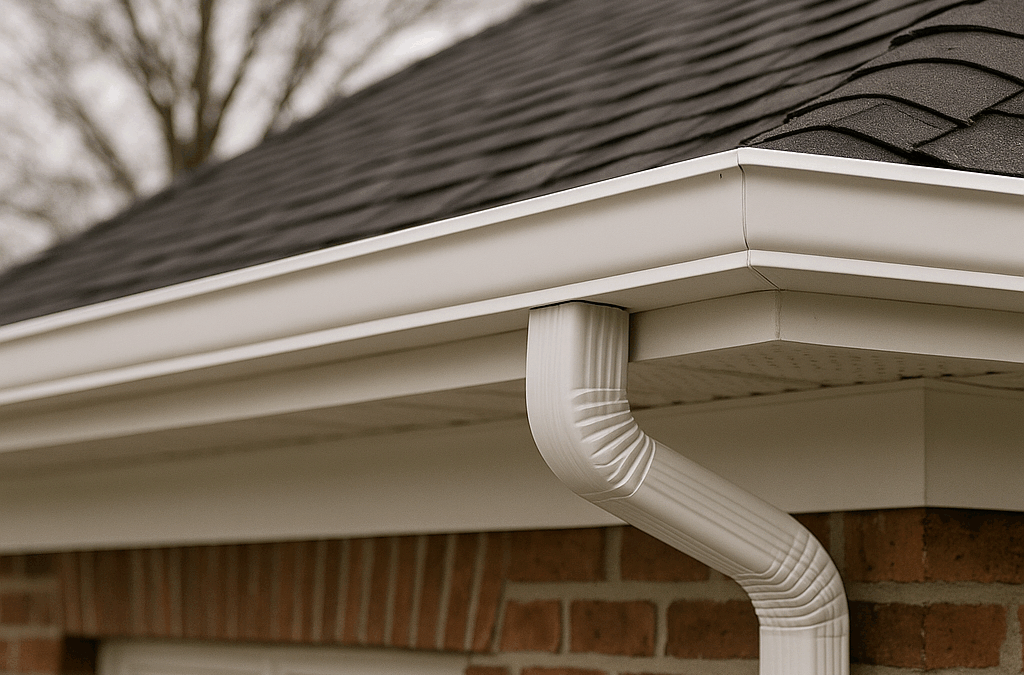
During a Memphis rain, one downspout may release a steady stream while another appears completely dry. The difference can look like proof of a clog, but downspouts on the same house do not always receive equal amounts of water. Roof shape, gutter slope, rainfall direction, outlet location, and debris all influence which pipe begins flowing first.
The most useful question is not whether the streams match. It is whether each downspout behaves consistently with the roof area and gutter section connected to it.
Each Downspout Serves a Particular Drainage Area
A downspout does not collect rain on its own. It receives runoff from one or more roof surfaces that feed a connected gutter run.
A pipe below a broad roof plane or valley may handle much more water than a pipe serving a short porch edge. Dormers, additions, intersecting roofs, and changes in eave height can divide a home into separate drainage zones. Two downspouts only a few yards apart may therefore have very different workloads.
This difference becomes especially visible during light rain. A large drainage area may produce a stream quickly, while a smaller section only generates an occasional drip.
Wind Can Make Rainfall Uneven
Rain rarely falls under identical conditions on every side of a house. Wind can push more water toward one roof slope and reduce direct rainfall on the opposite side. Overhangs, taller roof sections, and nearby trees may also change how much water reaches a particular surface.
A dry downspout during one wind-driven storm may flow normally during rain from another direction. Comparing several storms offers better evidence than judging the system from a single weather event.
Gutter Slope Directs Water Toward Selected Outlets
Gutters are installed with a subtle lengthwise pitch toward their outlets. On a long run with more than one downspout, the high point may divide water between the two directions. If the divide is not centered, one outlet can receive more of the channel’s length.
Roof runoff may also enter closer to one outlet. A valley that empties near a downspout can create a concentrated stream before water reaches the rest of the gutter.
An uneven or sagging section can alter this pattern. Water may collect in a low area or move toward a different outlet than expected. Standing water visible after a storm is a separate clue, but it does not establish the reason for the low spot.
Debris Can Change the Route Without Blocking It Completely
Late-fall gutters around Memphis may contain leaves, pine needles, seed material, small twigs, and roof grit. A complete plug is not required to affect downspout flow.
A leaf mat can act like a shallow divider, sending more water toward one outlet. Fine material may gather around a downspout opening and admit only part of the runoff. Debris farther down the pipe may slow discharge while the gutter above continues filling.
These conditions can change between storms as material becomes wet, dries, settles, or moves. Gutter and downspout cleaning addresses ordinary debris in the channel and pipe, but uneven flow may also involve the roof layout, gutter pitch, or outlet position.
Light Rain and Heavy Rain Reveal Different Patterns
Rainfall intensity changes the amount of information visible from the ground.
During a brief shower, a small drainage zone may not collect enough water to produce a noticeable stream. A few drops at the outlet can be consistent with limited inflow.
During a stronger storm, both downspouts may begin flowing. If water spills over the gutter while one pipe remains dry, the dry pipe becomes more notable. Overflow above a quiet outlet may suggest debris at the opening, but similar symptoms can result from gutter position, a low spot, or water arriving faster than the section can move it.
Follow the Entire Water Path
The visible pipe opening is only the final part of the route. From a stable location, note where rain lands, which roof surfaces direct water to the gutter, and whether a valley concentrates runoff near one area.
Then observe the gutter edge. Does water enter cleanly, run behind the channel, spill over the front, or remain contained? At ground level, compare the timing of discharge rather than expecting identical volume.
Some downspouts connect to extensions or underground pipes. Water may be moving through the downspout without remaining visible at the final destination. The condition of a buried route cannot be determined solely from the roofline.
Use Repeated Observations Instead of a One-Time Test
A short record can make the pattern clearer. Note whether the rain is light or heavy, the wind direction, which downspout starts first, and whether overflow occurs. Compare the same outlets during another storm.
Avoid inserting tools into a downspout during rain or leaning a ladder against the gutter. Memphis thunderstorms can bring lightning, slick pavement, and sudden changes in runoff. A phone video from a covered, stable location can preserve the sequence without close access.
Uneven Flow Is a Clue, Not a Diagnosis
Different downspout volumes can reflect normal roof drainage zones, uneven rainfall, gutter pitch, outlet placement, or partial debris buildup. A quiet pipe is more meaningful when it repeatedly stays dry during substantial rain while water collects or overflows in the connected gutter.
By comparing roof area, rainfall intensity, gutter behavior, and outlet timing, Memphis homeowners can describe the pattern accurately without assuming that every difference is a blockage.