
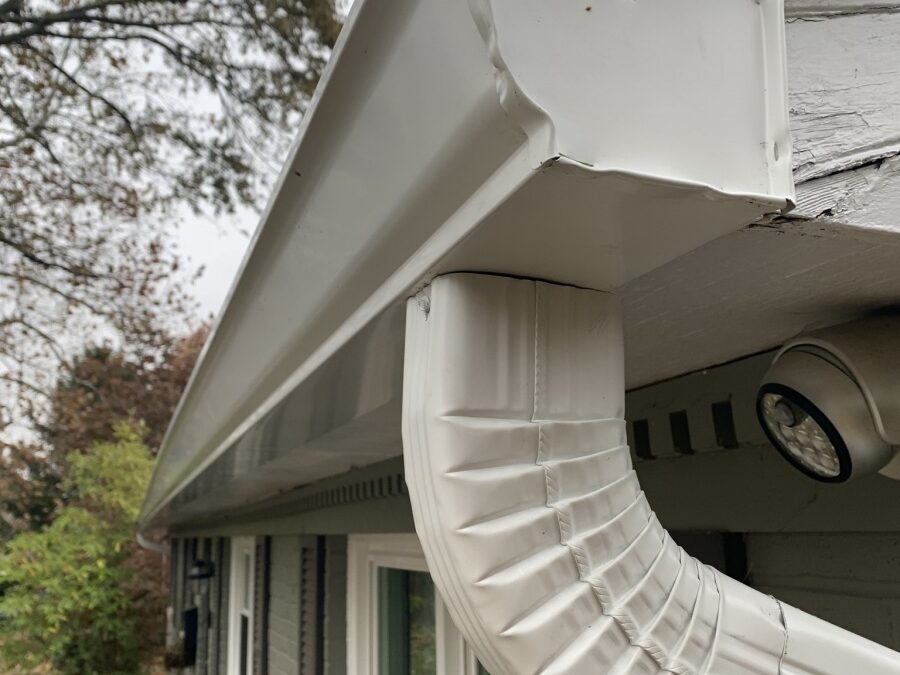
Dark lines on the face of a gutter can seem to appear overnight, but they usually build gradually. Memphis heat, humidity, pollen, tree debris, and frequent rain all contribute to the film that collects on exterior surfaces. Once runoff repeatedly follows the same paths, that film can become visible as gray, brown, or black streaks.
Not every mark means the gutter is failing. Some are mainly cosmetic, while others point to overflow or water traveling somewhere it should not. Recognizing the pattern is more useful than judging the color alone.
Why Vertical Lines Form on the Gutter Face
Many dark gutter lines begin at the upper front edge and run downward. During rain, small amounts of water can curl over the gutter lip instead of dropping directly into the channel. The water carries dust, pollen, roof particles, and organic residue across the painted surface. As it evaporates, some material remains.
Repeating this process creates narrow tracks that are sometimes called tiger stripes. Their spacing can reflect the places where water most often crosses the edge. A humid Memphis summer can keep surfaces damp longer, giving airborne material more opportunity to adhere.
These lines do not automatically indicate a clog. They can appear even when the channel and downspouts are open. Their location, however, can help distinguish ordinary surface staining from a drainage issue.
Streaks, Oxidation, and Organic Growth Look Different
Several conditions can change the appearance of aluminum gutters.
Runoff Streaks
Runoff streaks are usually vertical and uneven. They often begin near the gutter lip, below a roof valley, or where a concentrated stream reaches the system. Fresh marks may look darker after rain and lighter once dry.
Chalking and Oxidation
Painted aluminum can develop a dull or powdery surface as its finish ages. This weathering is often more uniform than runoff streaking. A gutter may look faded on the sunniest side of a Memphis home while shaded sections retain more of their original color.
Algae, Mildew, and Other Organic Film
Green, brown, or black patches are more likely where shade and moisture persist. Tree-covered lots and north-facing rooflines may dry slowly after rain. Organic growth can overlap with dirt streaks, making the surface appear mottled rather than evenly faded.
Rust-Colored Marks
Aluminum itself does not rust like steel, but nearby steel fasteners, flashing, or other metal components can create orange-brown stains. Rust-colored trails deserve a closer look because the source may be a different part of the roof-edge assembly.
When a Stain May Indicate Overflow
A broad dirty band, splash marks beneath the gutter, or streaking that becomes pronounced after storms may be related to water spilling over the front. Leaves, pine needles, seed pods, and compacted debris can reduce the channel’s capacity. A restricted downspout can also cause water to rise until it crosses the gutter edge.
Memphis thunderstorms can deliver a large amount of rain in a short period. Overflow during only the hardest rainfall does not have the same cause in every case. Roof area, roof pitch, gutter position, debris, and downspout flow all affect how the system handles runoff.
Interior gutter and downspout cleaning concerns material inside the drainage path. It is different from washing discoloration off the exterior face. Removing a blockage may address an overflow pattern, but it does not necessarily remove an older stain that has already bonded to the finish.
Other Water Paths That Leave Marks
Staining behind a gutter or on the fascia suggests a different route than staining on the outer face. Water may be approaching the roof edge, moving behind the gutter, or following a joint before it reaches the wall below. Gutter apron and drip edge are parts of the transition between the roof edge and gutter, so their condition and placement can affect the path water takes.
Marks concentrated below a corner, end cap, or downspout connection may reflect intermittent dripping. A stain alone cannot identify whether the source is a joint, an obstruction, wind-driven rain, or water from another surface. Watching the area during rainfall can provide more useful information than inspecting it only when dry.
A Safe Way to Evaluate Gutter Discoloration
Start from the ground and note the shape, color, and location of each mark. Binoculars or a zoomed photograph can reveal whether a streak begins at the lip, below a joint, or behind the gutter. Compare the same area during light rain and a heavier shower if it can be done from a safe location.
Avoid leaning a ladder against a gutter or working near overhead electrical lines. Also avoid combining household cleaners, since some mixtures release hazardous fumes. Before applying any product to a painted finish, check the gutter manufacturer’s care guidance and test a small, inconspicuous area. Strong abrasives and harsh chemicals may alter the coating even when they remove visible dirt.
What Memphis Homeowners Can Learn From the Pattern
Exterior gutter stains are evidence of repeated exposure, but they are not a diagnosis by themselves. Thin vertical stripes often reflect runoff residue. Uniform fading may be surface weathering. Shaded patches may involve organic growth, while wide bands and splash marks can be clues that water has crossed the gutter edge.
The most useful approach is to separate appearance from drainage. Observe the system during rain, check for signs of overflow from a safe position, and consider the surrounding roof edge, fascia, and downspout path. That context can show whether a Memphis gutter stain is mainly cosmetic or part of a water-flow pattern that warrants closer evaluation.