
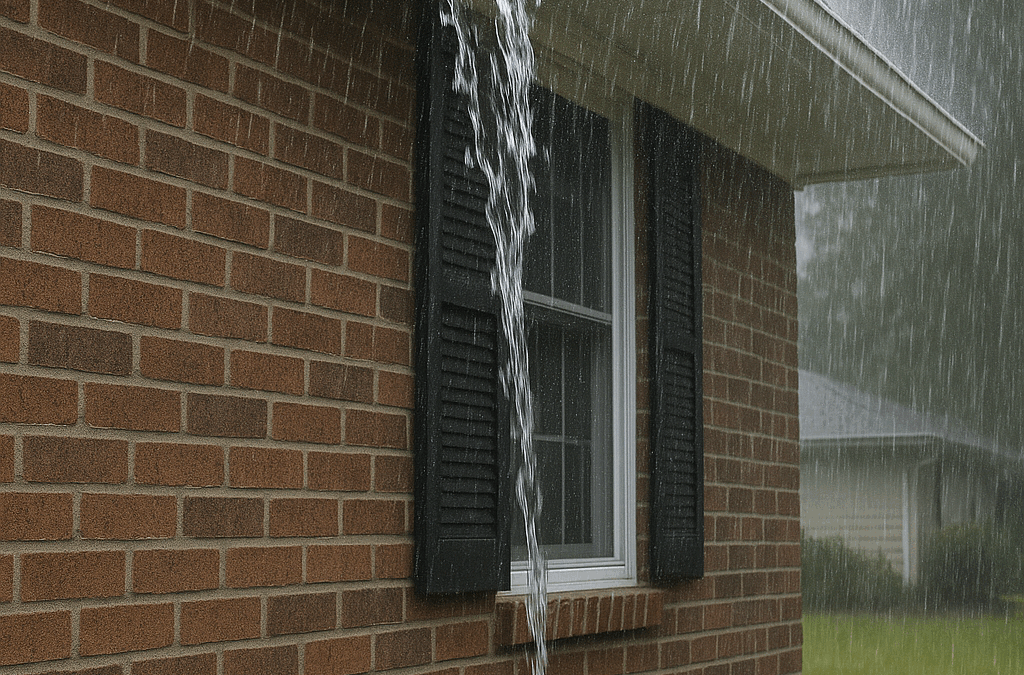
Memphis storms can arrive with intense rainfall, gusty winds, lightning, falling branches, and sudden changes in temperature. While homeowners often look first for damaged shingles or broken tree limbs after severe weather, the gutter system deserves equally careful attention. Gutters, downspouts, fascia, and drainage extensions work together to manage roof runoff, and a storm can affect any part of that system. Tiger Gutters encourages Memphis, Tennessee homeowners to understand how storm damage can affect gutters, what warning signs to look for after severe weather, and why a timely inspection can help identify small drainage problems before repeated rainfall creates larger moisture concerns.
Why Storms Affect Gutter Systems
A gutter system is attached along the roof edge, where it is exposed to direct rainfall, wind pressure, debris, and runoff from the roof. During a typical Memphis thunderstorm, gutters may receive water at a much faster rate than during a light, steady rain. If wind-driven leaves, twigs, seed pods, or roof granules are already in the channel, the sudden increase in water flow can create temporary or persistent blockages.
Wind is another major factor. Strong gusts can pull at loose hangers, bend sections of aluminum, dislodge downspout extensions, or move branches into the gutter channel. Even when a gutter does not visibly detach, a storm may loosen fasteners enough to change the system’s slope. A gutter that no longer slopes consistently toward the downspout can retain standing water after the storm has passed.
Memphis also has a substantial tree canopy in many neighborhoods. Mature oaks, sweetgums, maples, pecans, and other trees can drop leaves, sticks, seed pods, and limbs onto roofs and into gutters. A branch that lands across the gutter may bend the channel, damage the fascia behind it, or block water from traveling toward the downspout.
The First Safety Rule: Inspect From the Ground First
A post-storm inspection should begin safely from ground level. Homeowners should avoid climbing onto wet roofs or using ladders in muddy, windy, or unstable conditions. Storm-damaged trees, saturated soil, slick walkways, and overhead electrical hazards can all make exterior inspection more dangerous than usual.
From the ground, look along the roofline for obvious changes in gutter alignment. Gutters should appear straight, consistently attached to the fascia, and evenly pitched. A section that looks lower than the rest of the channel, pulls away from the roof edge, or tilts outward may have loose hangers or damaged fasteners.
Binoculars can be useful for inspecting upper roof edges, especially on two-story homes. They can help homeowners look for debris dams, detached end caps, bent downspouts, or water stains beneath the gutter line without climbing a ladder.
Signs of Wind Damage to Gutters
Wind damage does not always mean that a gutter has blown completely off the home. More often, it causes subtle alignment and fastening problems that affect drainage over time.
One common sign is a visible gap between the back of the gutter and the fascia board. This may mean that fasteners have loosened or that wind pressure has pulled the gutter away from the roof edge. A gap can allow water to run behind the gutter rather than into it, exposing the fascia and soffit to repeated moisture.
Another warning sign is a gutter section that appears wavy, twisted, or uneven. Aluminum gutters are lightweight and durable, but they can bend when struck by a branch or exposed to severe wind force. A bent channel may not hold water evenly, which can lead to standing water and overflow during future storms.
Downspouts also deserve attention. Look for sections that have pulled apart at elbows, detached from the wall, or shifted out of alignment. A disconnected downspout may still appear mostly intact from a distance, but even a small separation can release roof runoff against siding, landscaping, or the foundation perimeter.
Heavy Rainfall and Overflow Clues
After a substantial Memphis rainstorm, the ground around the house can provide useful evidence about gutter performance. Look for erosion channels in mulch beds, splashed mud on siding, watermarks on fascia, or washed-out areas below gutter corners and downspout outlets. These signs may indicate that water overflowed the gutter or was discharged too close to the home.
Overflow can happen for several reasons. The gutter may be blocked by leaves or branches. The downspout inlet may be clogged. The system may have lost its slope. The gutter may be too small for a large roof drainage area during a high-intensity storm. In some cases, the gutter itself is clear, but a blocked underground drainage outlet prevents water from leaving the downspout system, causing water to back up toward the roofline.
Water stains beneath gutter joints, corners, and end caps are also important. These locations can develop small leaks as sealants age or as thermal movement and storm vibration stress the connection points. A small joint leak may not be noticeable during ordinary rain, but a heavy storm can reveal it through concentrated dripping and staining.
Check for Debris and Roof Granules
Storms commonly leave debris in gutter channels. Leaves, twigs, bark, shingle granules, pine needles, seed pods, and small branches can collect at low points and near downspout inlets. This material can reduce channel capacity even if it does not create a complete blockage.
Roof granules are especially worth noticing. Small amounts of granules may appear in gutters as roofing materials age, but unusually heavy accumulation after a storm can be a reason to inspect the roof more closely. Granules protect asphalt shingles from ultraviolet exposure, and their presence in large quantities may indicate that shingles have experienced significant wear or storm-related impact.
Debris should not be left in the gutter after a storm simply because water is still flowing around it. Organic material holds moisture against the gutter floor, encourages biological growth, and can gradually compact into a dense blockage. In Memphis’s warm and humid climate, retained organic debris can break down quickly and create a heavy, wet mass that adds unnecessary load to the gutter system.
Inspect Downspout Extensions and Drainage Areas
A storm can shift downspout extensions, especially flexible corrugated extensions and flip-up styles. After severe weather, confirm that each extension remains connected, points away from the foundation, and is not buried under mulch, leaves, or washed-in soil.
The discharge area itself should also be inspected. If water has created a deep depression, washed away mulch, or left a muddy pool near the foundation, the downspout may be depositing too much water in one location. The goal of a drainage system is not simply to move water from the roof to ground level; it is to direct water away from the structure in a controlled way.
Memphis homes with clay-bearing soil should pay particular attention to concentrated discharge near the foundation. Clay soils can hold moisture for extended periods and expand when wet, making repeated saturation around the foundation a concern. Properly positioned extensions and positive ground grading help reduce the amount of roof runoff that remains near the home after a storm.
Fascia, Soffit, and Siding Warning Signs
Storm-related gutter problems can affect more than the gutter itself. When water flows behind a loose gutter or spills over a blocked channel, it can wet the fascia board, soffit panels, and siding below the roof edge.
Look for peeling paint, dark streaks, bubbling finish, soft-looking wood, or water stains beneath the gutter line. These conditions may indicate that water has repeatedly escaped the intended drainage path. In some cases, the damage began before the storm, but the storm made it more visible by forcing a larger volume of water through a weak area.
Document What You Find
Photographs are helpful after a storm. Take clear images of bent gutter sections, fallen branches, water stains, damaged downspouts, displaced extensions, and erosion areas. Documentation can help homeowners compare conditions over time and keep a record of changes that may be useful when discussing repairs, roof conditions, or insurance-related questions.
It can also be useful to note the date of the storm, the areas where water was seen overflowing, and whether the issue occurred near a specific downspout or roof valley. Patterns matter. If the same gutter section overflows during multiple storms, that section may need closer evaluation for slope, blockage, capacity, or drainage configuration.
Conclusion
Storm damage can affect gutters in ways that range from obvious branch impact to subtle slope loss, loose fasteners, blocked downspouts, and displaced extensions. For Tiger Gutters and Memphis, Tennessee homeowners, a careful post-storm inspection is an important part of protecting the roofline, fascia, landscape, and foundation from recurring water-management problems. By checking gutter alignment, debris buildup, drainage flow, downspout discharge, and visible moisture damage after severe weather, homeowners can better understand how their gutter system responded to the storm and identify conditions that deserve attention before the next Memphis rainfall event.