
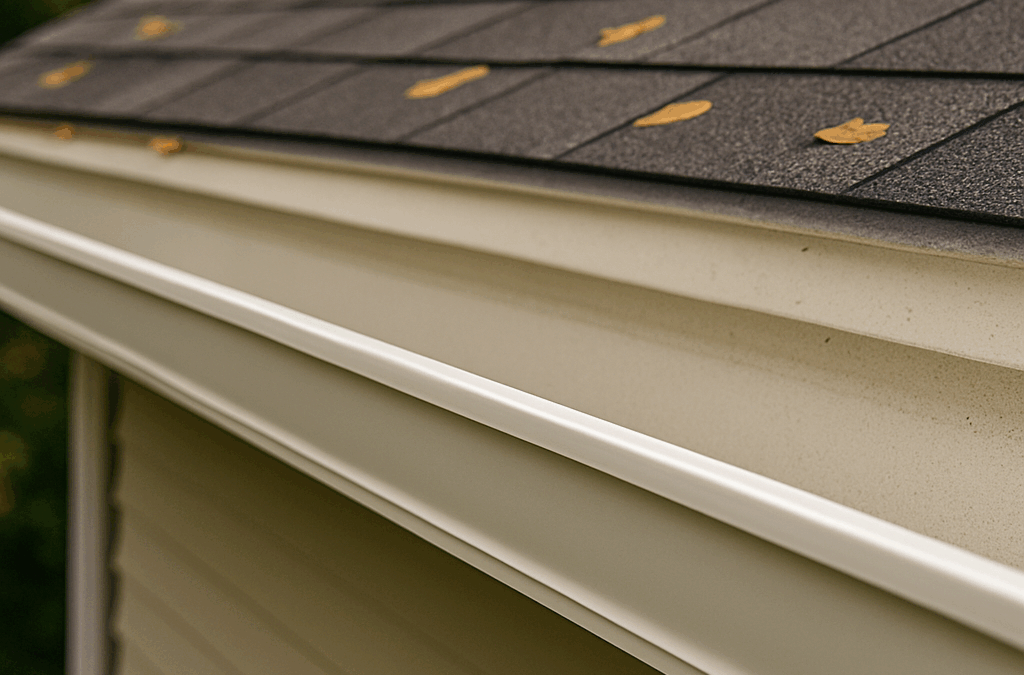
Movement along a Memphis roofline does not always mean an animal is living inside the gutter. Birds may stop for water, squirrels may cross the eave while moving between trees, and small animals may investigate leaves or seeds caught near an outlet. The clues left behind can look similar, so the most useful first step is to observe the pattern without assuming a single cause.
Late fall can make these visits easier to notice as tree cover thins and roof edges become more visible.
What Attracts Wildlife to a Gutter?
A gutter can briefly provide several things an animal is already seeking: water, food, loose material, or a travel route.
After a Memphis rain, shallow water may remain on a leaf, inside a low section, or near a partially restricted outlet. A visiting bird might sip from those droplets or briefly splash in them. The visit itself does not prove that the gutter is clogged.
Acorns, seeds, berries, and insects may also collect near roof edges. A squirrel carrying food might pause in the gutter or leave fragments behind. Birds may search damp leaf piles for insects rather than for a nesting site.
Gutters also run along convenient boundaries. A branch close to the roof can give an animal a direct path to the eave, while a downspout or corner may serve as a temporary stopping point.
Signs That Can Be Seen From the Ground
No single sign identifies an animal with certainty. Location, timing, and repeated activity are more informative together.
Nutshells and Food Fragments
Broken acorn shells, seed husks, or fruit remains may indicate feeding activity. Wind and roof runoff can move the same material, however, so a small pile is not proof that an animal placed it there.
Twigs, Grass, and Fibers
A loose twig in a gutter is ordinary storm debris. A compact cluster of dry grass, fine stems, feathers, or fibers may deserve closer attention, especially if birds repeatedly enter the same spot. Material that appears organized should not be pulled apart until it is clear that no active nest or animal is present.
Droppings or Repeated Perching
Marks on the gutter face, roof edge, or pavement below can reflect frequent perching. They may also come from animals crossing the roof. Watching from a window or recording a short video from the ground can help distinguish a regular route from an occasional visit.
Displaced Debris
An animal searching for food can scatter leaves or push small material toward an outlet. Wind and flowing water create similar patterns. If the arrangement changes on dry, calm days, animal activity becomes one possible explanation, not a confirmed diagnosis.
Why Late Fall Changes the Pattern in Memphis
Memphis often moves through warm afternoons, cool nights, rain, and windy periods during late fall. Those changes affect both animals and gutter debris.
Dry leaves can be moved by wind or by an animal crossing the channel. Once wet, the same leaves may settle into a heavier mat. Falling acorns and other tree material can remain available after much of the canopy has emptied. A brief warm period may also keep insects active around damp organic matter.
This means the evidence may change from one day to the next. A gutter that appears quiet after rain may show fresh shell fragments or disturbed leaves during a later dry spell.
Animal Activity and Drainage Are Separate Questions
Seeing a bird or squirrel at the roofline does not establish that the gutter has a drainage problem. Likewise, a drainage restriction does not prove that wildlife caused it.
The practical question is whether water still follows the intended route. During rain, homeowners can safely watch for water entering the gutter, traveling toward the downspout, and leaving the outlet. Overflow near an animal-visited area may be related to leaves, twigs, nesting material, gutter slope, or another condition. The location alone cannot determine the cause.
Gutter and downspout cleaning is a service listed for removing ordinary debris from the drainage path. It should not be treated as wildlife removal. If an animal, active nest, or uncertain biological material is present, that issue should be identified before the debris is disturbed.
Do Gutter Guards Keep Animals Away?
A guard changes the open profile of a gutter so some falling material is intercepted before settling below. It is not automatically a wildlife barrier. Openings at roof transitions, corners, or the ends of a guard may still attract investigation, and leaves or seeds can remain on top of some guard surfaces.
The presence of a guard therefore changes what can be observed, but it does not prove that animals cannot reach the roof edge. Any inspection should consider the guard’s design and condition without assuming it serves a purpose for which it was not intended.
Observe Without Creating a New Hazard
Roof edges, wet pavement, and ladders introduce more immediate risk than most of the signs described above. The metal channel is not a structural brace for climbing equipment. Homeowners can often gather useful information from a window, the yard, or a stable paved area with a phone camera.
Avoid reaching into hidden material or disturbing an animal. If activity appears to involve an active nest, an injured animal, or entry into the structure, the situation extends beyond ordinary gutter maintenance.
Reading the Roofline Carefully
Birds and squirrels visit Memphis gutters for water, food, insects, shelter, or convenient travel along the eave. Shell fragments, fibers, droppings, and moved leaves provide context, but none proves a single explanation.
Separating wildlife activity from drainage behavior leads to a clearer assessment. Observe when the animal appears, note what material is present, and watch how water moves during rain without climbing onto the roof. That record can distinguish a brief visit from a recurring pattern while keeping the conclusion appropriately cautious.