
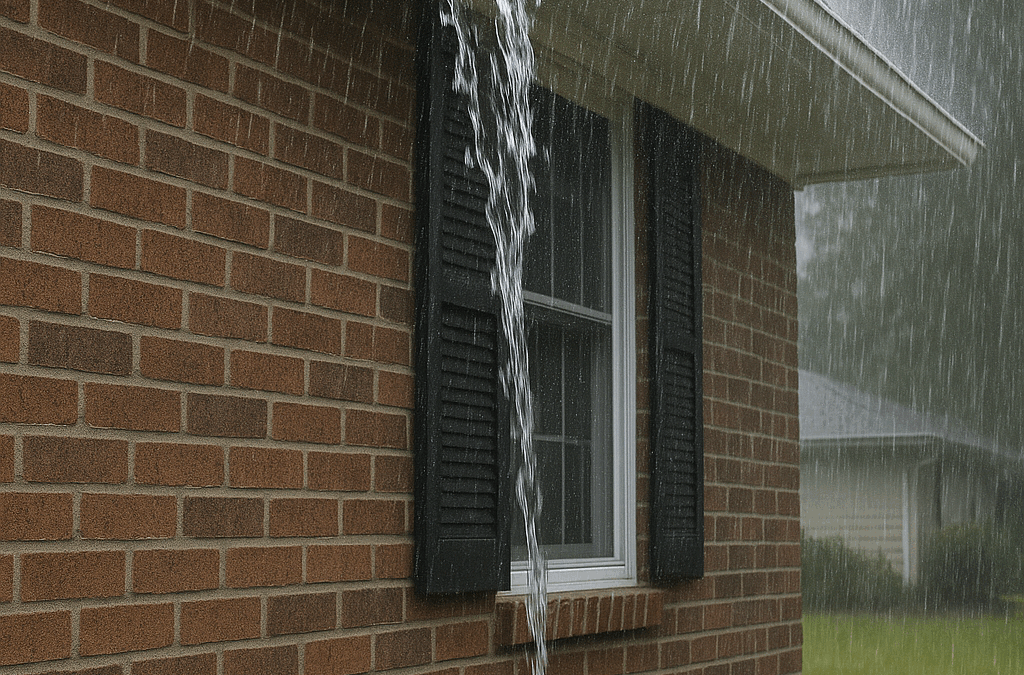
Moisture on a gutter does not always come from rain. On a cool Memphis morning, small droplets may cover the metal even though the sky stayed clear overnight. At another time, a wet mark may appear only during a storm and trace back to a joint, roof edge, or overflowing section.
Condensation and drainage problems can look similar from the ground. Timing, weather, and the shape of the wet area provide more useful clues than the presence of water alone.
Why Condensation Forms on Gutters
Air contains water vapor. When a surface becomes cool enough, vapor can condense into liquid droplets. The relevant temperature is the dew point: if the gutter surface reaches or falls below it, moisture may collect on the metal.
After sunset, exposed materials release heat, and calm, cloudless conditions may allow metal to become especially cool. Humid Memphis air can then leave broad morning dew across gutters, downspouts, vehicles, lawns, and other outdoor surfaces.
Condensation is normal weather behavior. It does not, by itself, show that water has escaped from inside the gutter.
Clues That Moisture May Be Dew
Condensation often appears as many small droplets spread across a broad area. It may cover the front, bottom, and downspout rather than begin at one seam. Nearby metal surfaces can show a similar film.
Time of day is another clue. Dew is commonly most noticeable around sunrise and begins drying as temperatures rise or direct sunlight reaches the roofline. A shaded side of the house may remain damp longer than a sunny elevation.
Weather context matters as well. If no rain occurred but grass, roofs, and parked cars are also wet, condensation is a reasonable possibility. That evidence is not conclusive; irrigation, plumbing, or another local water source could still affect a particular area.
How a Gutter Leak Usually Presents Differently
A leak is more likely to follow water flowing through or around the gutter system. It may begin during rain, continue briefly after a storm, or recur when water reaches a particular level.
Location can narrow the possibilities. A concentrated drip below an end cap, corner, outlet, or downspout connection differs from an even layer of dew. Water appearing behind the gutter or on the fascia suggests a different route from droplets spread across the exposed face.
A stain beneath the wet point may show that the path has repeated, but staining is not proof of an active leak. Dirt, oxidation, and previous overflow can leave marks after the original moisture is gone.
Overflow Can Resemble a Leak
Water crossing the front edge may drip from the bottom and appear to come through the gutter. Leaves, needles, sediment, or a restricted downspout can change the water level inside the channel. Concentrated roof runoff can also create a wet area during heavier rain even when a light shower produces no visible symptom.
Watching the sequence is helpful. If water first rises near the top edge and then wraps underneath, the path differs from a drip that begins directly at a joint. Wind can complicate the pattern by pushing rain onto the gutter face or beneath the roof edge.
Gutter and downspout cleaning concerns debris inside the drainage route. It may be relevant when overflow accompanies visible buildup, but it is not an explanation for every wet gutter.
Condensation and Leaks Can Occur Together
The two conditions are not mutually exclusive. A gutter may collect dew before sunrise and later leak during an afternoon storm. Condensation can also make it harder to identify a small rainwater path because the surrounding surface is already wet.
For that reason, one observation rarely settles the question. Comparing the same location on a dry morning, a dewy morning, during light rain, and during a stronger storm creates a more useful record.
A Safe Observation Method
Begin from ground level. Photograph the roofline before sunrise or early in the morning, then repeat after the surface has had time to warm. Note whether moisture is widespread or concentrated near a connection.
During rain, remain in a sheltered location and watch when the wet spot begins. Look for water crossing the front lip, traveling behind the gutter, or emerging from one joint. Observe the nearest downspout discharge if it is visible without approaching moving water.
Keep the observation at ground level when the yard is wet or electrical lines are nearby. A phone camera’s zoom or binoculars may reveal useful detail without placing weight against the gutter or requiring a climb.
Reading Moisture in Context
For Memphis homeowners, widespread morning droplets after a humid, rain-free night are more consistent with condensation than with a single active leak. A recurring drip tied to rainfall and one connection deserves a different interpretation. Overflow, wind-driven rain, and roof-edge flow add other possibilities.
The most reliable distinction comes from repeated observation. Weather conditions, timing, location, and the route water takes can help separate ordinary dew from moisture that appears when the gutter system is carrying rain.