
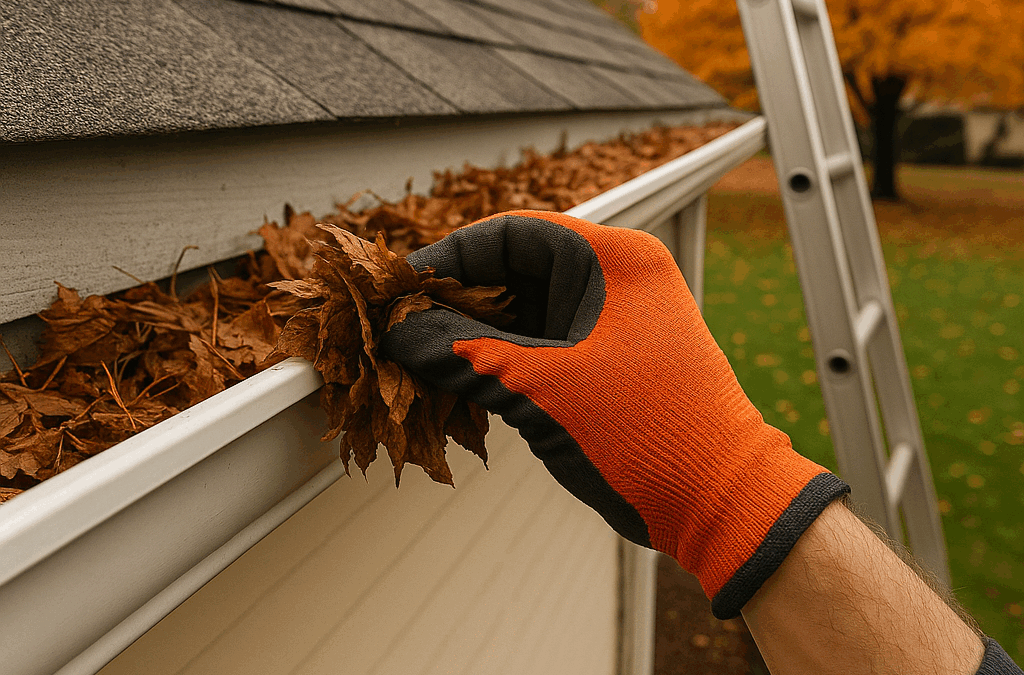
Gutter guards change where autumn debris collects, but they do not make leaves disappear. On a Memphis home, oak leaves, pine needles, seed pods, twigs, and fine organic particles may land on top of a guard, lodge along its edges, or pass through small openings. The resulting pattern depends on the guard design, nearby trees, roof shape, wind, and rainfall.
Understanding those patterns is useful during Mid-South leaf season. A guard may keep larger material out of the channel while still needing periodic observation and maintenance.
Gutter Guards Separate Debris by Size and Shape
Most gutter guards create a barrier between roof runoff and the open gutter channel. The barrier may use holes, slots, mesh, a curved surface, or another configuration. Water needs to reach the gutter while debris remains above or moves past the roof edge.
That separation is not absolute. Broad leaves may rest on the surface. Pine needles can bridge openings or enter at an angle. Small seed fragments, pollen, roof granules, and decomposed material may fit through spaces that block larger pieces.
For this reason, the condition on top of a guard can differ from the condition inside the gutter. A clear-looking surface does not confirm that the channel is empty, and a layer of dry leaves on top does not necessarily mean the gutter below is clogged.
Why Leaves Sometimes Form a Mat
Dry leaves are light enough for wind to move. Once wet, they flatten and can overlap like shingles. Several layers may form a temporary mat across the guard surface, particularly in roof valleys or sheltered corners where runoff and wind concentrate material.
Memphis weather can alternate between dry, breezy periods and heavy rain. Leaves that shift during one afternoon may settle into a different position after the next storm. Fine particles can fill the spaces between larger leaves and make the layer denser.
The mat may loosen as it dries, break apart during wind, or remain in place. Its behavior cannot be predicted from leaf quantity alone. Leaf species, moisture, roof pitch, and guard texture all contribute.
How Surface Debris Can Change Rainwater Flow
When water reaches an unobstructed guard, it follows the surface and openings provided by that design. Debris can alter that route. Water may spread sideways, slow above a covered section, or cross the outer edge instead of entering the gutter at the same point.
This does not produce the same result in every storm. Light rain may pass through a surface that sheds some water during a downpour. A roof valley can deliver concentrated runoff to one small area while nearby sections receive much less.
Signs visible from the ground may include water overshooting the gutter, dripping from several points along the front, or leaving a damp line on accumulated leaves. One observation during extreme rainfall is not enough to identify a cause; comparing behavior across different rain intensities provides better context.
Fine Material Can Accumulate Below a Guard
Gutter guards are most visible at the roof edge, but small particles can collect beneath them over time. Pollen, grit, leaf fragments, and organic sediment may enter with water or through openings. Material can also settle near the downspout outlet, where the drainage route narrows.
The amount and location vary by property. Homes beneath mixed tree cover may receive several kinds of debris at different points in the fall. A thin layer spread across the channel behaves differently from a concentrated deposit at an outlet.
Gutter and downspout cleaning is a separate maintenance activity from simply brushing loose leaves off the top of a guard. Depending on the system, access to the channel may require guard-specific procedures. Forcing tools beneath panels or lifting attached sections without understanding their fastening method may bend components or disturb their position.
What to Look for During Memphis Leaf Season
Begin with a ground-level inspection after dry, windy weather and again after rain. Note whether debris is scattered or concentrated below a valley, beside a dormer, or near a roof corner. Look for sections where the leaf layer stays wet longer than surrounding areas.
During rainfall, observe from a sheltered location. Water should not be assumed to follow the same route in every storm, so record where it enters, spreads, or crosses the edge. A phone camera with zoom can make comparisons easier without approaching the roofline.
Avoid climbing onto a wet roof or leaning a ladder against the gutter. Overhead electrical lines, soft ground, and slick leaves create additional hazards. If a guard manufacturer provides care instructions, those instructions should guide any surface maintenance because materials and fastening systems differ.
Gutter Guards Still Need Seasonal Attention
A gutter guard may reduce the amount of large debris that enters a gutter, but fall conditions continue above and below the barrier. Leaves can mat on the surface, needles can bridge openings, and smaller particles can reach the channel. Wind and rain may clear some areas while concentrating material in others.
For Memphis homeowners, the practical question is not whether guards eliminate maintenance. It is how the particular roof, trees, and guard design interact during leaf season. Safe observation before, during, and after rain can reveal where debris is moving and whether water is following the expected route.