
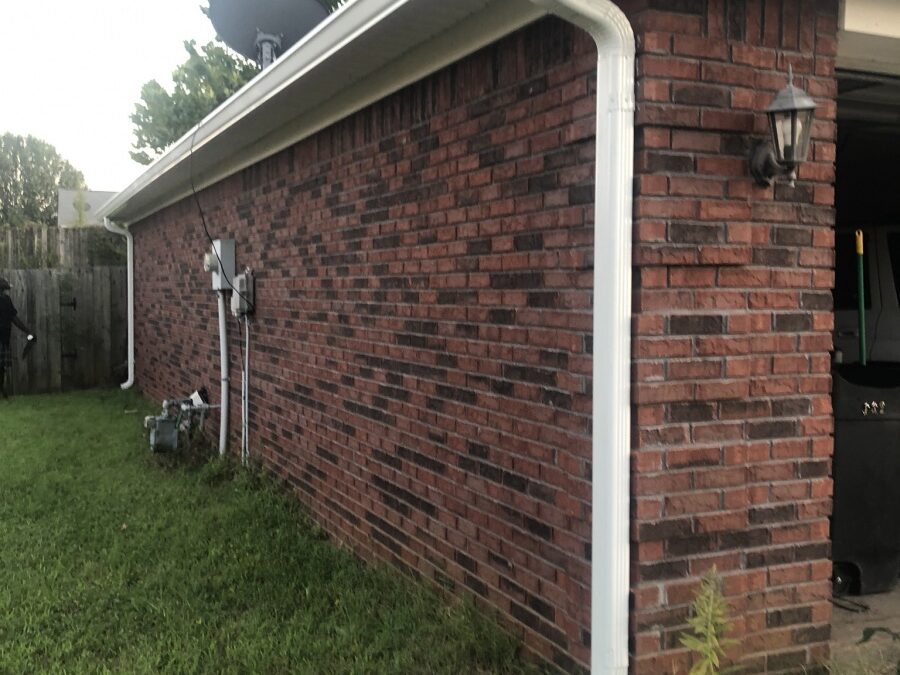
Rainwater moving through a downspout is rarely silent. A steady rush during a Memphis shower can be normal, but clattering, gurgling, dripping, or sudden knocking may offer clues about how water and debris are traveling through the gutter system.
Roof size, rainfall intensity, pipe shape, wall construction, and discharge location all influence what homeowners hear. When and where a noise occurs can help distinguish ordinary drainage from a pattern worth observing.
Why Downspouts Produce Sound
A downspout changes the direction and speed of roof runoff. Water drops from the gutter outlet into a vertical pipe, moves through elbows, and exits near the ground. Every turn can create turbulence or cause water to strike metal.
Aluminum downspouts can also transmit vibration to nearby fascia, siding, and framing. A modest sound at an elbow may seem louder indoors when the pipe is attached near a bedroom or an otherwise quiet room.
Memphis thunderstorms add intensity. A brief downpour sends water through the system much faster than light rain, so a downspout that is quiet in a drizzle may become noticeably louder during a storm.
A Steady Rush Is Often Ordinary Flow
Consistent rushing generally indicates that water is moving through the pipe. The volume may rise and fall as rainfall changes or as separate roof areas deliver runoff to the same gutter run.
This sound is often strongest near the upper elbow and lower outlet. Large roof sections and valleys can concentrate water at one location, creating more force than runoff entering from a simple roof edge.
Steady sound without overflow or irregular discharge may reflect ordinary flow. Comparing the same pipe during several storms can establish what is typical.
Gurgling May Point to Interrupted Airflow
Water does not move through a downspout by itself; air must also shift through the pipe. When water, leaves, or sediment partly restrict the passage, trapped air may escape in pulses and create a gurgling sound.
A partial blockage near the gutter outlet or inside an elbow can produce this pattern. Water may still discharge at ground level, but the flow can alternate between strong bursts and weaker output.
Gurgling can also occur when the bottom of a downspout empties into a pipe or extension that is holding water. Observing whether the sound begins at the top, middle, or base can narrow the area of interest.
Dripping After Rain Can Have Several Causes
An isolated drip may continue after a storm because a small amount of water remains on an elbow seam or inside a corrugated section. Metal surfaces and joints can release those final droplets slowly.
Persistent dripping from one connection may also indicate a small gap, loose joint, or retained water above a restriction. If the gutter has a low point, water may continue feeding the downspout long after other sections have drained.
The location matters. Dripping inside the pipe has a hollow, repetitive sound, while leakage outside the pipe may leave visible wet marks on siding, brick, or soil.
Rattling and Tapping Often Involve Solid Material
Acorns, seed pods, small twigs, and shingle granules can make distinct sounds as they move through a metal downspout. A single object may create a quick series of taps before exiting. Material lodged in an elbow may rattle repeatedly as water passes around it.
Wind can create a similar noise when a loose strap or downspout section vibrates against the wall. If tapping occurs during dry, windy weather, moving hardware may be more likely than flowing debris.
Memphis homes beneath oaks, pecans, pines, or sweetgums may hear more solid material during parts of the fall. The timing of the noise can therefore be as informative as the sound itself.
Knocking Can Result From Water Hitting an Elbow
Some downspouts make a hollow knock when a concentrated stream reaches a bend. The water briefly strikes the elbow before changing direction. This may become more noticeable when rainfall starts suddenly.
Repeated, forceful knocking accompanied by movement of the pipe can suggest that a strap or connection is loose. From the ground, homeowners may be able to see whether the downspout shifts, separates at a joint, or touches another exterior component.
Wet ladders, overhead wires, and storm conditions make climbing hazardous.
Splashing at the Base Deserves Context
Sound near the bottom may come from water landing on a hard surface, striking an extension, or pooling at the outlet. A splash block, corrugated extension, buried drain connection, gravel bed, and concrete walkway each produce a different sound.
Homeowners can look at where the water goes after leaving the pipe. A clear discharge path usually sounds different from an outlet surrounded by standing water or accumulated leaves. Soil erosion, displaced mulch, and splash marks can provide additional context.
A Simple Ground-Level Listening Check
During a safe, ordinary rain, homeowners can note:
- Whether the noise is steady or intermittent
- The section where it sounds loudest
- Whether the pipe moves when the sound occurs
- Whether water overflows at the gutter above
- Whether discharge arrives as a steady stream or separate bursts
- Whether dripping continues well after the rain stops
- Whether the same pattern returns during later storms
A short video recorded from a sheltered location can preserve both the sound and visible water behavior. Comparing light and heavy rain can also show whether the noise changes only with flow volume.
What Downspout Sounds Can Tell Memphis Homeowners
A rushing downspout may be moving water normally. Gurgling can accompany restricted airflow, rattling may involve debris or loose hardware, dripping can reflect retained water or a joint, and splashing often depends on the discharge area.
Sound is one piece of evidence. Combined with overflow, pipe movement, and ground-level discharge, it gives Memphis homeowners a clearer picture of gutter behavior through changing Mid-South rain patterns.