
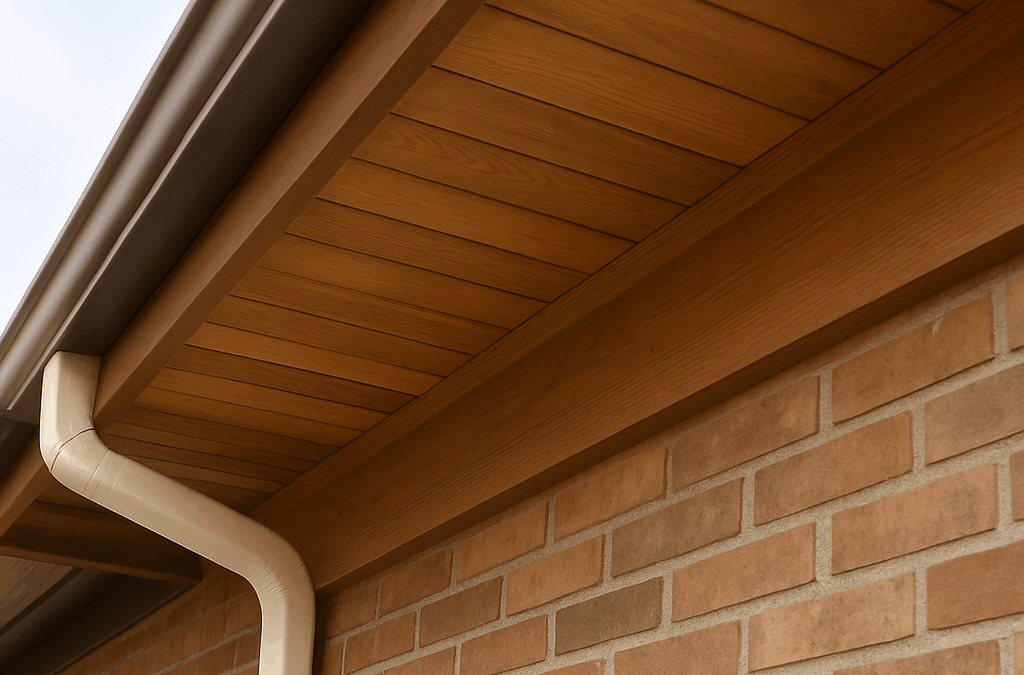
Memphis, Tennessee homeowners with traditional wood soffit face unique challenges maintaining this critical yet often overlooked exterior component. Wood soffit—the material covering the underside of roof overhangs—serves both aesthetic and protective functions, yet Memphis’s humid subtropical climate creates conditions that accelerate wood deterioration. Tiger Gutters regularly encounters Memphis-area properties where wood soffit has suffered significant damage from moisture exposure, insect activity, and weather-related deterioration, requiring repair or complete replacement. Understanding what causes wood soffit damage, recognizing when professional intervention becomes necessary, and appreciating the complexity of proper repair or replacement work helps homeowners make informed decisions about protecting their properties from progressive damage that affects not just soffit but entire roof edge systems, attic spaces, and interior areas.
Understanding Wood Soffit and Its Critical Functions
Wood soffit refers to wooden boards or panels installed on the underside of roof eaves where rooflines extend beyond exterior walls. Looking upward from ground level at your home’s eaves, the horizontal surface between the exterior wall and the fascia board is the soffit. Historically, wood represented the standard soffit material—typically pine, cedar, plywood, or hardboard products chosen for availability and workability. Wood soffit serves multiple essential purposes beyond simply creating finished appearance. It conceals structural roof framing members including rafters and truss tails, prevents birds, squirrels, and insects from accessing attic spaces through open eaves, and when properly vented with screened openings, facilitates critical attic ventilation allowing fresh air intake that combines with ridge or gable vents to create beneficial air circulation.
Despite these important functions, wood soffit remains vulnerable to numerous deterioration mechanisms that Memphis’s climate accelerates. Unlike modern synthetic alternatives engineered to resist weather and biological attack, natural wood absorbs moisture, supports fungal growth, provides nutrition for wood-destroying insects, and gradually breaks down through exposure to ultraviolet radiation and temperature cycling. When wood soffit fails, consequences extend beyond mere cosmetic concerns—compromised soffit allows pest infiltration, reduces attic ventilation effectiveness, permits moisture entry that damages roof decking and insulation, and signals potential problems with adjacent fascia boards and roof edge structures.
How Memphis’s Climate Damages Wood Soffit
Memphis’s humid subtropical climate with hot, humid summers and mild, damp winters creates nearly ideal conditions for wood deterioration. The city’s approximately 54 inches of annual rainfall combined with average relative humidity frequently exceeding 70 percent means wood soffit rarely fully dries, maintaining moisture content that promotes decay. Summer afternoon thunderstorms deliver intense rainfall that wind-driven conditions force upward into soffit areas. High humidity between rain events prevents thorough drying, creating persistent dampness wood-decay fungi require for colonization and growth.
Temperature patterns compound moisture problems. Memphis’s hot summers with temperatures regularly reaching the 90s create ideal conditions for rapid fungal growth in damp wood. The region’s mild winters rarely bring sustained freezing that might slow biological activity, meaning wood deterioration continues year-round rather than pausing seasonally as occurs in colder climates. Occasional winter freezes followed by thaws create freeze-thaw cycling that progressively damages wood cellular structure, accelerating breakdown processes.
Wood soffit faces additional threats from Memphis’s active insect populations. Carpenter bees bore tunneling galleries into exposed wood creating structural damage and entry points for moisture and decay fungi. Termites, prevalent throughout Memphis, readily attack accessible wood including soffit areas, particularly when moisture damage has already weakened wood structure. Carpenter ants colonize rotting wood, accelerating deterioration. These combined biological threats—moisture, fungi, and insects—work synergistically, with each damage type facilitating and accelerating others.
Inadequate original installation compounds climate-related problems. Soffit installed without proper ventilation traps moisture-laden air in attic spaces, promoting condensation on soffit undersides that accelerates rot from within. Soffit installed too close to roof edges receives excessive water exposure from roof runoff. Soffit painted with inappropriate products that trap moisture rather than allowing natural breathing accelerates hidden deterioration. These installation deficiencies, common in older Memphis homes, substantially reduce wood soffit service life.
Recognizing Signs Wood Soffit Needs Professional Attention
Several visible indicators suggest wood soffit has sustained damage requiring professional evaluation. Peeling or bubbling paint on soffit surfaces typically indicates moisture infiltration from behind, with water vapor pushing paint away from wood as it attempts to escape. Discoloration or dark staining suggests water exposure and possible fungal colonization beginning decay processes. Visible cracks, splits, or separations in soffit boards indicate structural breakdown from moisture cycling or insect damage.
Soft or spongy spots detected when pressing soffit surfaces signal advanced wood rot where decay fungi have broken down wood structure. Visible holes in soffit, particularly perfectly round holes approximately half-inch diameter, indicate carpenter bee activity creating nesting galleries. Sagging sections suggest structural failure where deteriorated wood can no longer support its own weight. Visible fungal growth including mushrooms, shelf fungi, or fuzzy mold indicates serious moisture problems and advanced decay.
From interior attic spaces, water staining on soffit backs or adjacent roof framing indicates moisture infiltration. Daylight visible through soffit boards suggests separation, warping, or complete failure creating gaps. Insect evidence including termite mud tubes, carpenter ant frass (sawdust-like material), or actual insect presence confirms pest colonization requiring immediate professional intervention.
Homeowners often overlook early damage signs until problems become severe because soffit remains out of direct sight lines and receives minimal attention during routine property maintenance. By the time obvious visible damage appears from ground level, deterioration has typically progressed extensively, often affecting not just soffit but also fascia boards, roof decking edges, and rafter tails—damage requiring far more extensive and expensive repairs than early intervention would have necessitated.
Why Wood Soffit Repair and Replacement Requires Professional Expertise
While homeowners might assume soffit work represents straightforward carpentry suitable for DIY approaches, proper wood soffit repair and replacement involves complexities and challenges requiring professional expertise. Accurate damage assessment represents the critical first step—professionals must determine deterioration extent, identify underlying causes, and evaluate whether adjacent components require attention. This assessment requires experience recognizing damage patterns, knowledge of building systems, and often invasive investigation removing sections to examine hidden areas. Homeowners typically lack training and perspective to accurately evaluate damage scope, frequently underestimating problems and attempting inadequate repairs that fail quickly.
Safe access to soffit areas requires specialized equipment and safety protocols. Soffit work means operating at heights typically 12 to 25 feet above ground while reaching overhead to work on horizontal surfaces. This requires stable scaffolding systems, properly positioned ladder configurations, or lift equipment that homeowners rarely possess. Working overhead while managing tools, materials, and fasteners creates significant fall risks. Professional soffit contractors maintain appropriate equipment, implement fall protection systems, and carry comprehensive insurance protecting property owners from liability.
Material selection and proper installation demand professional knowledge. Not all wood products suit soffit applications—species selection affects moisture resistance, paint adhesion, and longevity. Thickness, grain orientation, and grade impact performance and durability. Ventilation requirements must be calculated and implemented correctly, balancing adequate attic airflow against weather protection. Proper flashing integration with adjacent roof edges and fascia boards prevents future moisture infiltration. Paint or stain products must be selected specifically for exterior soffit applications, with proper surface preparation and application techniques ensuring adhesion and longevity. These technical considerations substantially exceed typical homeowner knowledge.
Underlying problem correction often proves more important than visible repair. When moisture damage has caused soffit deterioration, simply replacing boards without addressing moisture sources guarantees premature failure of new materials. Professionals investigate and correct inadequate roof edge flashing, improperly functioning gutters, insufficient attic ventilation, or other moisture sources before installing new soffit. This comprehensive approach prevents recurring problems that plague homeowner attempts focusing solely on replacing obviously damaged visible materials.
Repair Versus Complete Replacement Decisions
Determining whether damaged wood soffit can be effectively repaired or requires complete replacement involves professional judgment based on damage extent, underlying cause, and long-term considerations. Limited localized damage—perhaps a single damaged board section from specific impact or isolated leak—may be suitable for repair if surrounding soffit remains sound and underlying causes have been corrected. Repair involves carefully removing damaged sections, addressing any structural issues, installing matching replacement pieces, and refinishing to blend with existing material.
However, extensive deterioration affecting large areas or multiple non-adjacent sections typically indicates systemic problems making complete replacement more practical and cost-effective than attempting piecemeal repairs. When damage inspection reveals widespread hidden deterioration, attempting to save marginally acceptable sections proves false economy—these areas will likely fail soon, requiring additional work. Complete replacement allows installing modern materials throughout, ensuring consistent appearance, uniform performance, and extended service life.
Many homeowners facing wood soffit problems choose replacement with modern alternatives rather than installing new wood. Vinyl soffit offers maintenance-free performance, complete moisture resistance, and lower long-term costs despite higher initial material expense compared to basic wood. Aluminum soffit provides exceptional durability and fire resistance. Fiber cement soffit combines wood-like appearance with superior weather resistance. These alternatives eliminate recurring maintenance, painting, and premature replacement that wood requires in Memphis’s challenging climate. Professional contractors provide guidance comparing options based on specific property conditions, aesthetic preferences, and budget considerations.
The Risks of Delaying Necessary Soffit Work
Postponing necessary wood soffit repair or replacement allows progressive damage affecting far more than just soffit boards. Deteriorated soffit permits pest access to attic spaces where insects and animals cause extensive insulation damage, contamination, and structural harm. Compromised soffit reduces attic ventilation effectiveness, causing heat and moisture accumulation that damages roof decking, shortens shingle life, and increases cooling costs. Moisture entering through failed soffit damages roof edge structures including fascia boards and rafter tails, creating expensive structural repairs.
Water infiltration through damaged soffit can reach interior spaces, causing ceiling staining, insulation damage, and even interior wall damage as water travels along framing members. Mold growth in moisture-compromised attic spaces creates health concerns and remediation costs. What begins as seemingly minor soffit deterioration progressively worsens, with repair costs escalating dramatically as damage spreads to adjacent building components.
Professional intervention becomes increasingly complex and expensive as damage progresses. Early-stage problems might require limited board replacement, while advanced deterioration necessitates extensive structural repairs, fascia replacement, roof edge reconstruction, and remediation of secondary damage. The cost differential between early professional repair and delayed emergency intervention often exceeds 300-500 percent—not including costs addressing consequential damage to other building systems.
Professional Assessment Value
Professional wood soffit assessment provides detailed evaluation homeowners cannot replicate. Experienced contractors systematically inspect entire soffit systems, identifying obvious damage, probing to discover hidden deterioration, evaluating ventilation adequacy, examining adjacent fascia and roof edges, checking attic areas for moisture infiltration evidence, and assessing underlying causes. This comprehensive evaluation produces accurate scope understanding necessary for effective repairs.
Professional assessments include detailed documentation through photographs, written descriptions, and often moisture meter readings quantifying damage. This documentation proves valuable for insurance claims when storm damage or sudden failures occur. Detailed records also support property sale transactions, demonstrating disclosed conditions and professional evaluation rather than hidden problems discovered during buyer inspections.
Contractor assessments include repair or replacement recommendations with options suited to different budgets and priorities. Professionals explain trade-offs between temporary repairs, partial replacement, and complete system upgrades, helping homeowners make informed decisions aligned with their circumstances. Access to professional expertise prevents costly mistakes from inadequate repairs or inappropriate material selections.
Long-Term Considerations
Wood soffit in Memphis’s climate represents ongoing maintenance commitments. Even properly installed and maintained wood soffit requires regular inspection, periodic painting or staining, and eventual replacement as deterioration inevitably occurs. Homeowners must realistically assess their willingness and ability to provide this ongoing care when choosing repair approaches.
Many property owners facing significant wood soffit damage view the situation as opportunity for permanent solutions through modern alternative materials. While initial costs exceed basic wood replacement, long-term value through eliminated maintenance, superior durability, and extended service life makes alternatives attractive. Professional contractors help analyze life-cycle costs comparing options over expected service lives rather than just initial installation expenses.
Conclusion
Wood soffit repair and replacement in Memphis, Tennessee involves complexities extending far beyond simple carpentry, requiring professional expertise for accurate damage assessment, safe work execution, proper material selection, and underlying problem correction. Tiger Gutters understands that Memphis-area homeowners facing wood soffit deterioration benefit from professional evaluation determining whether repair suffices or replacement proves necessary, and whether modern alternative materials offer better long-term value than traditional wood in Memphis’s challenging humid climate. The combination of moisture-related decay, aggressive insect activity, and year-round biological threats makes wood soffit particularly vulnerable in Memphis, with professional intervention necessary to properly address damage, prevent progressive deterioration affecting adjacent building components, and implement solutions providing reliable long-term performance protecting homes from water damage and pest infiltration.